Sample Return Through the Ages, October 2025, Vol. 21, No. 5
May 11, 2026
Earth’s Carbon Cycle Thermostat: Beyond the Textbook Model, February 2026, Vol. 22, No. 1
May 11, 2026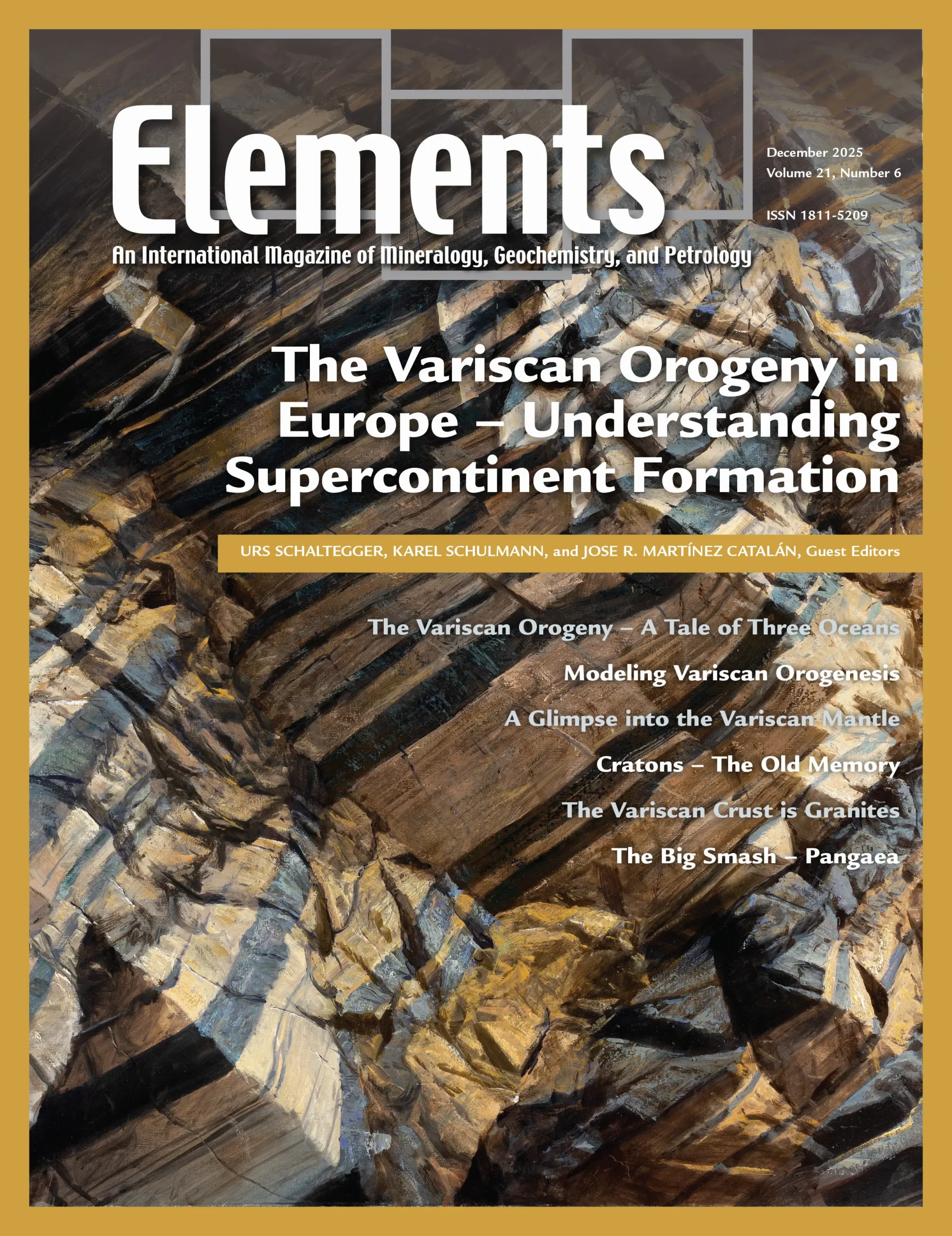
The Variscan Orogeny in Europe – Understanding Supercontinent Formation, December 2025, Vol. 21, No. 6
$20.00
The Variscan orogeny was one of the most significant mountain-building events in Earth’s geological history, occurring between 380 and 300 million years ago during the assembly of the Pangea supercontinent. Through multiple cycles of continental collision, ocean basin opening and closure, and the accretion of Gondwana-derived continental fragments onto the Laurussia margin, the Variscan belt became a defining feature of ancient Europe’s tectonic evolution.
The Variscan Orogeny in Europe – Understanding Supercontinent Formation
June 2025, Vol. 21, No. 6
The Variscan orogeny was one of the most significant mountain-building events in Earth’s geological history, occurring between 380 and 300 million years ago during the assembly of the Pangea supercontinent. Through multiple cycles of continental collision, ocean basin opening and closure, and the accretion of Gondwana-derived continental fragments onto the Laurussia margin, the Variscan belt became a defining feature of ancient Europe’s tectonic evolution.
Unlike many other orogenic systems, the Variscan orogen is distinguished by its unusually thick and predominantly magmatic crust, limited mantle involvement, and complex accretionary history marked by pulsed magmatism along major collision sutures. Because Pangea remains the youngest and best-preserved supercontinent on Earth, studying the Variscan orogeny provides valuable insights into the geological processes responsible for supercontinent formation and continental evolution.
Why You’ll Love The Variscan Orogeny in Europe – Understanding Supercontinent Formation:
- Supercontinent Formation Insights: Discover how the Variscan orogeny contributed to the assembly of the Pangea supercontinent.
- Advanced Tectonic Research: Explore the complex cycles of continental collision, ocean closure, and crustal growth that shaped ancient Europe.
- Unique Geological Features: Learn why the Variscan belt stands apart from other mountain-building systems through its magmatic crust and distinctive geodynamic processes.
Expand your understanding of Earth’s tectonic history and uncover how the Variscan orogeny reveals the mechanisms behind supercontinent assembly and planetary evolution.
Related products
-
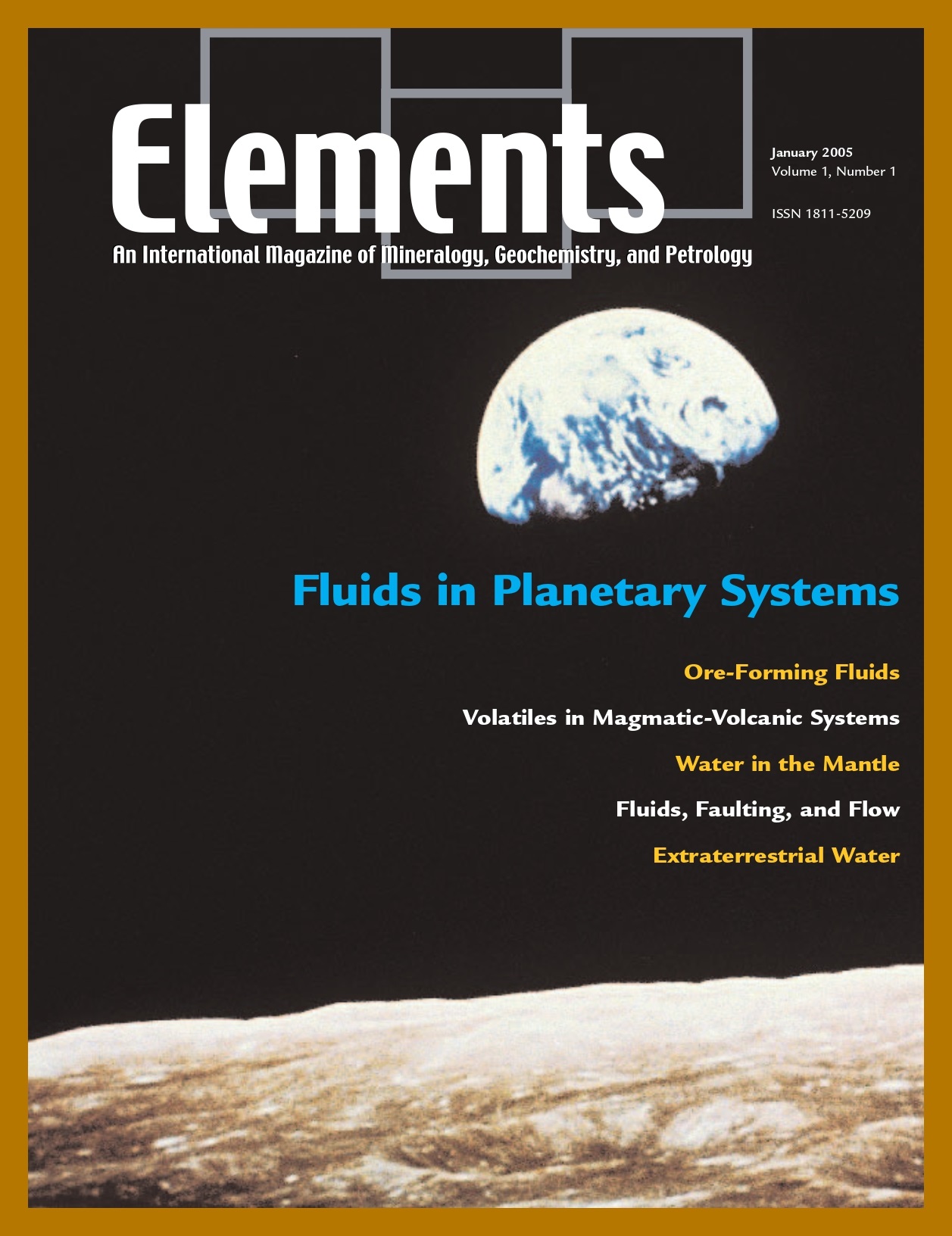
Fluids in Planetary Systems, January 2005, Vol. 1, No. 1
$20.00Water and other geofluids play an important role in the geochemical and rheological evolution of the Earth and other bodies in the solar system. These fluids are responsible for the formation of hydrothermal mineral deposits, affect eruption behavior in volcanic systems and the geophysical properties of the mantle, and significantly affect the way in which rocks deform and fracture.
-
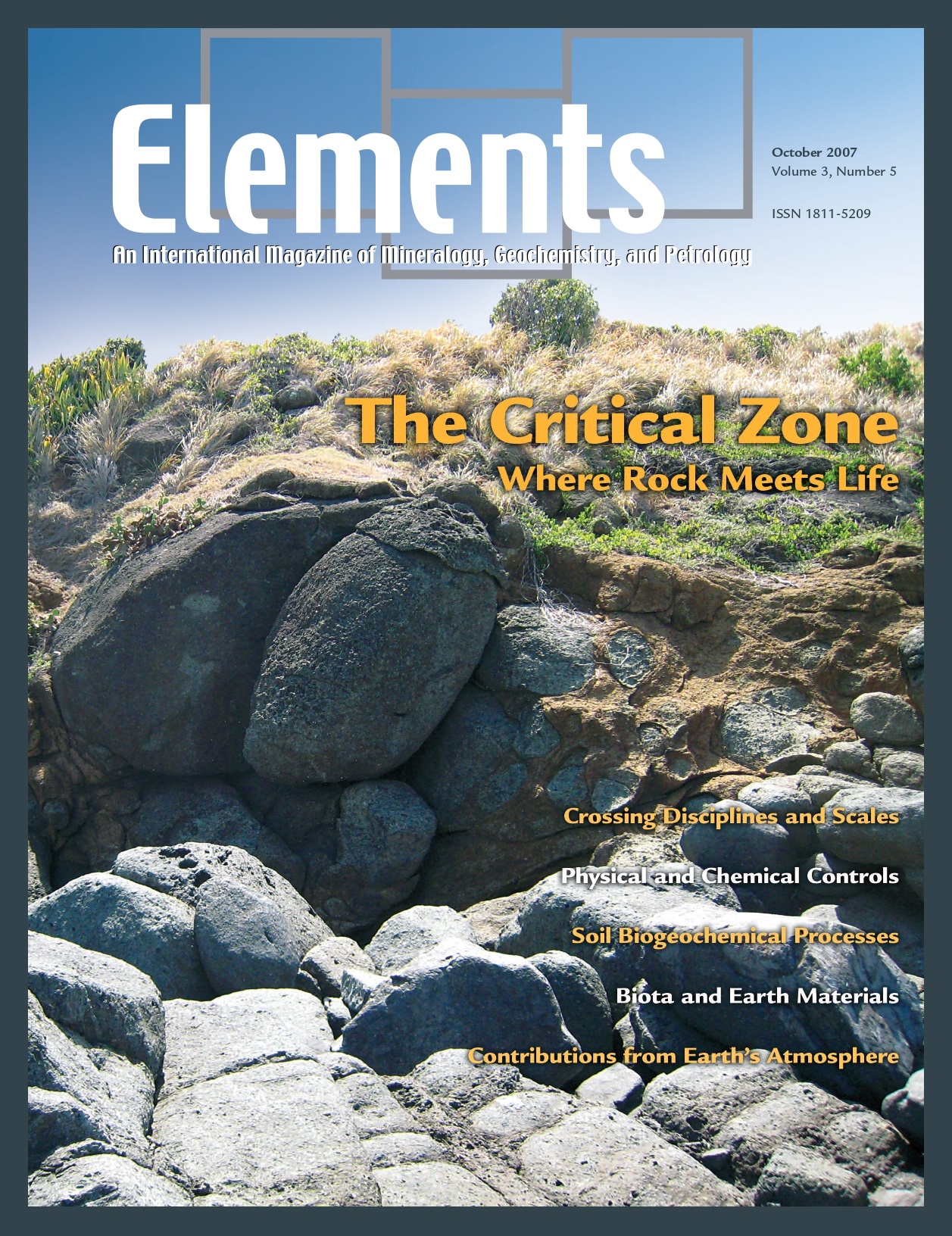
The Critical Zone, October 2007, Vol. 3, No. 5
$20.00The Critical Zone (CZ) encompasses all fluid, mineral, gaseous, and biotic components from the outer envelope of vegetation down to the lower limit of groundwater. It supports much of life on Earth.
-
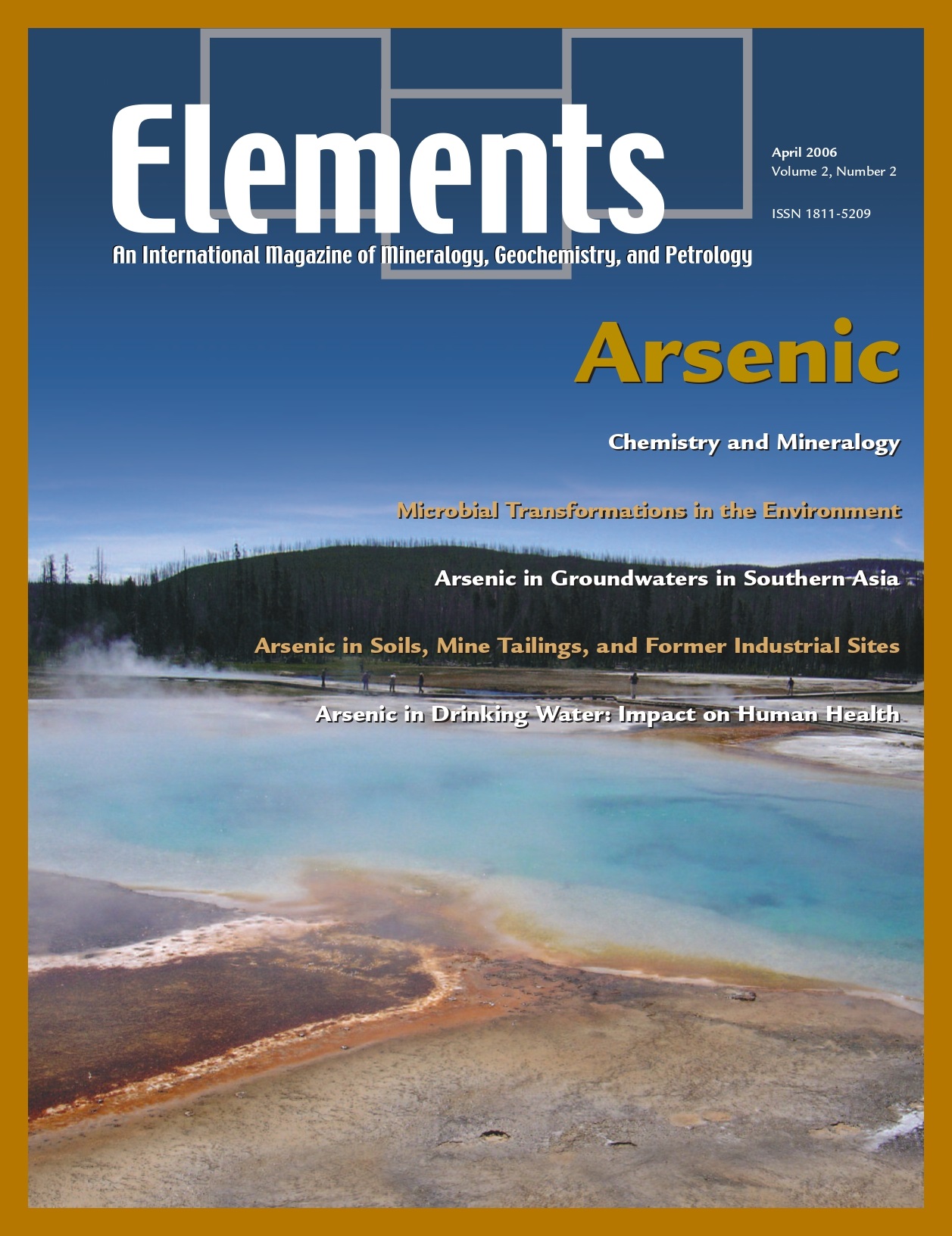
Arsenic, April 2006, Vol. 2, No. 2
$20.00Arsenic is an element known throughout history as a classic poison. Currently, very small but highly significant concentrations of this element in drinking water supplies are causing massive health problems to many millions of people in some of the world’s poorest nations, and more localised sources related to mining and processing are also a concern.