Cosmogenic Nuclides, October 2014, Vol. 10, No. 5
June 28, 2024
Mineralogy Of Mars, February 2015, Vol. 11, No. 1
June 28, 2024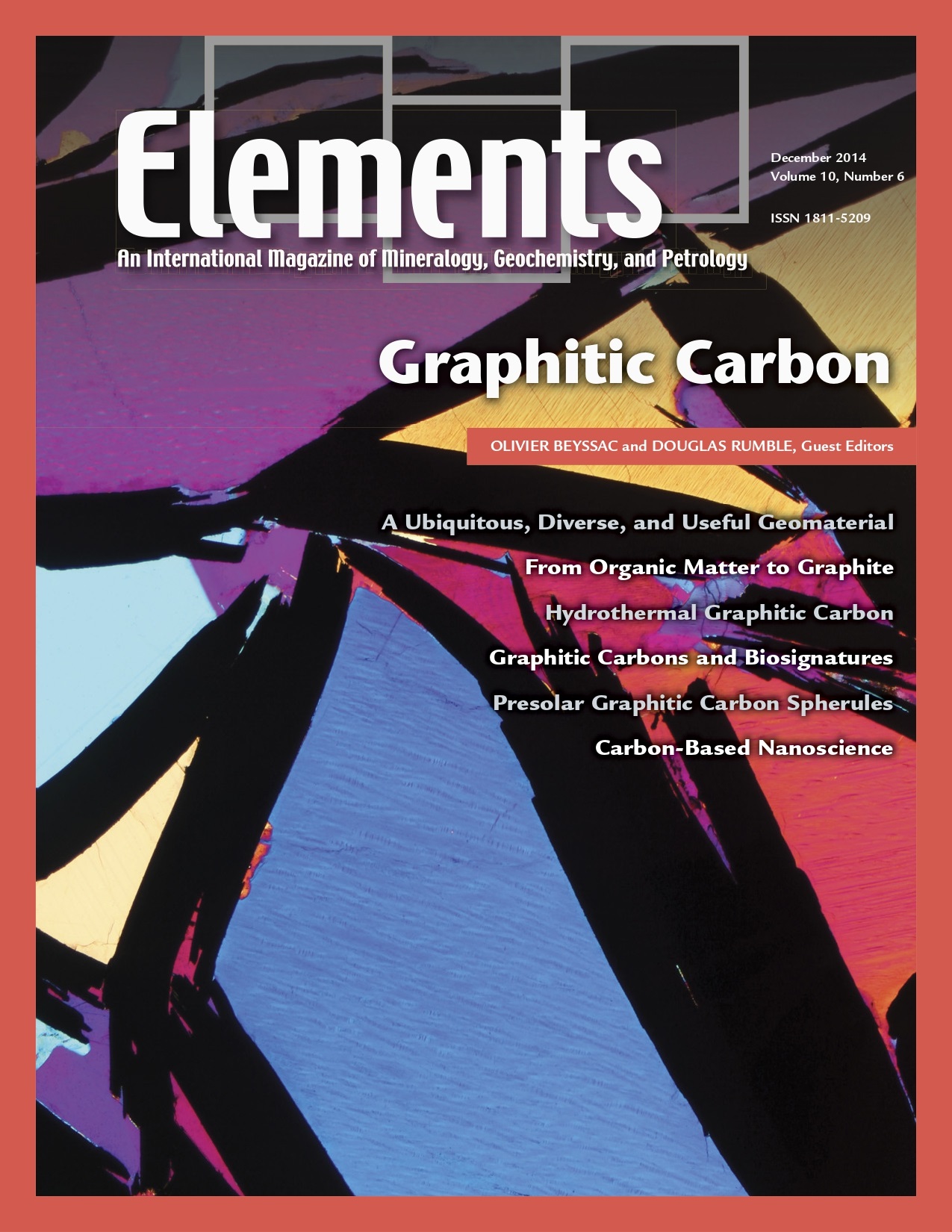
Graphitic Carbon, December 2014, Vol. 10, No. 6
$20.00
In natural systems, graphitic carbons are widespread and exhibit an infinite range of structure, from amorphous-like compounds (e.g.
Graphitic Carbon
December 2014, Vol. 10, No. 6
In natural systems, graphitic carbons are widespread and exhibit an infinite range of structure, from amorphous-like compounds (e.g. soots, charcoal) to crystalline graphite through a myriad of turbostratic structures (e.g. coals, kerogens). A variety of structures and chemistries down to the nanometer scale control the physicochemical properties of graphitic carbons and determine their behavior and fate during geological processes. This issue of Elements presents recent advances in our understanding of the formation of graphitic carbons (graphitization, fluid deposition) and discusses their role as actors and/or tracers in cosmochemistry, geobiology, geochemistry, and petrology. In particular, graphitic carbons may carry an important biological legacy in rocks, they may be used for assessing the thermal history of rocks, and they buffer the chemical composition of fluids in equilibrium with rocks. The issue also presents an introduction to the new carbon nanomaterials (e.g. graphene, carbon nanotubes), which bear structural similarities to natural graphitic carbons, and to their technological applications.
Why You’ll Love Elements Magazine:
- Expert Contributors: Articles written by renowned researchers in the field of geoscience.
- Engaging Content: Join a community of readers who are passionate about Elements.
- Exceptional Quality: Each issue is printed on high-quality paper with stunning visuals and detailed illustrations that bring complex scientific concepts to life.
Order your copy of the December 2014 issue of Elements magazine today and discover graphitic carbon.
Related products
-
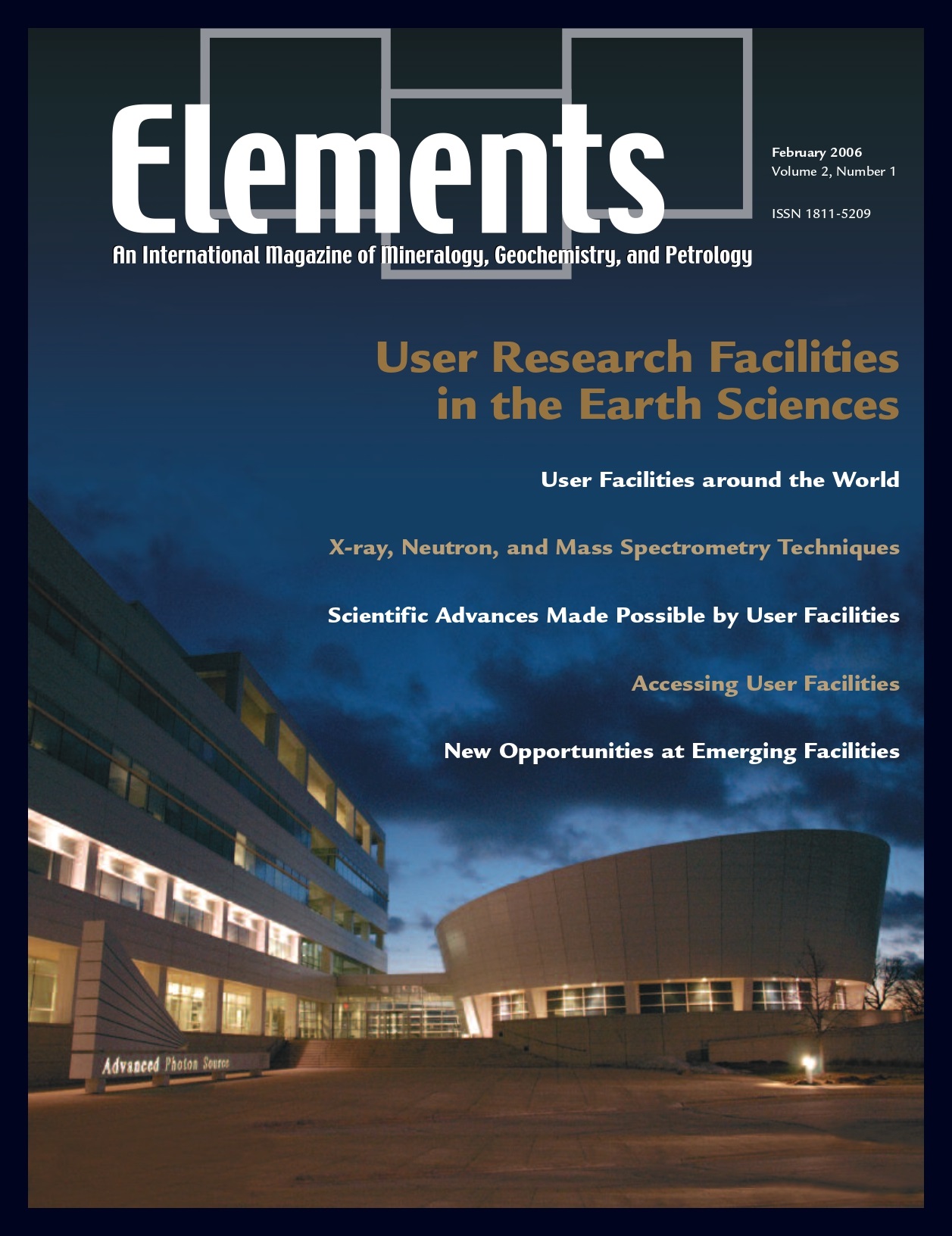
User Research Facilities In The Earth Sciences, February 2006, Vol. 2, No. 1
$20.00Earth scientists rely on effective access to user research facilities that provide state-of-the-art analytical instrumentation. This thematic issue focuses on some of these facilities and how to use them.
-
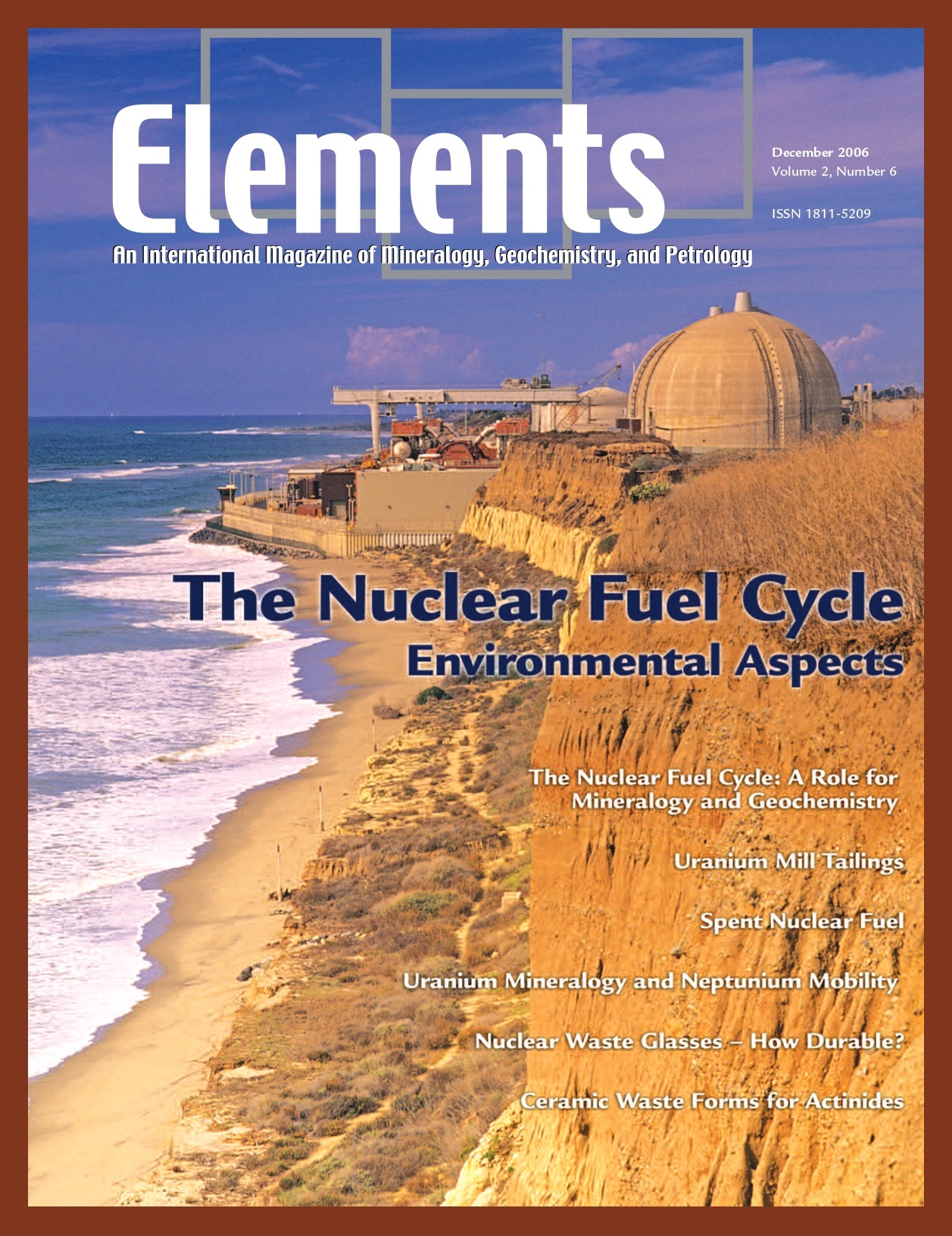
The Nuclear Fuel Cycle – Environmental Aspects, December 2006, Vol. 2, No. 6
$20.00Increasing concerns for the effects of global warming that result from rising greenhouse gas concentrations in the atmosphere have led to a reexamination, even enthusiasm, for nuclear power. Of all the current alternatives to fossil fuels, nuclear fission is the most important source of energy, accounting for 17 percent of the world’s electricity.
-
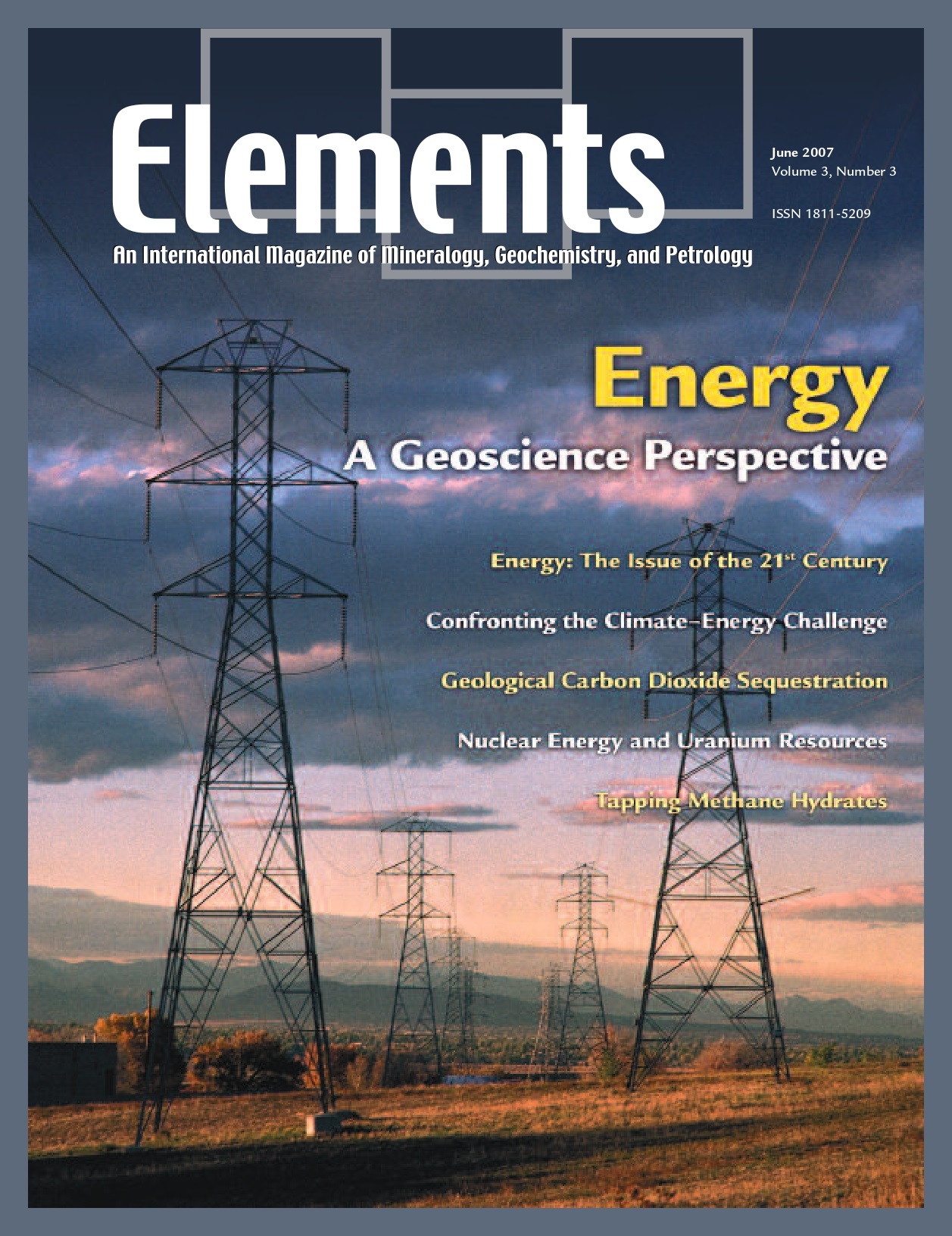
Energy: A Geoscience Perspective, June 2007, Vol. 3, No. 3
$20.00The issue of energy resources in the future may be one of the most important in the 21st century. Future climate change and the ways to abate it while still supplying needed energy will impact future political relations, world economics, human health, and the environment.