Lithium: Less Is More, August 2020, Vol. 16, No. 4
June 28, 2024
Hydrothermal Fluids, December 2020, Vol. 16, No. 6
June 28, 2024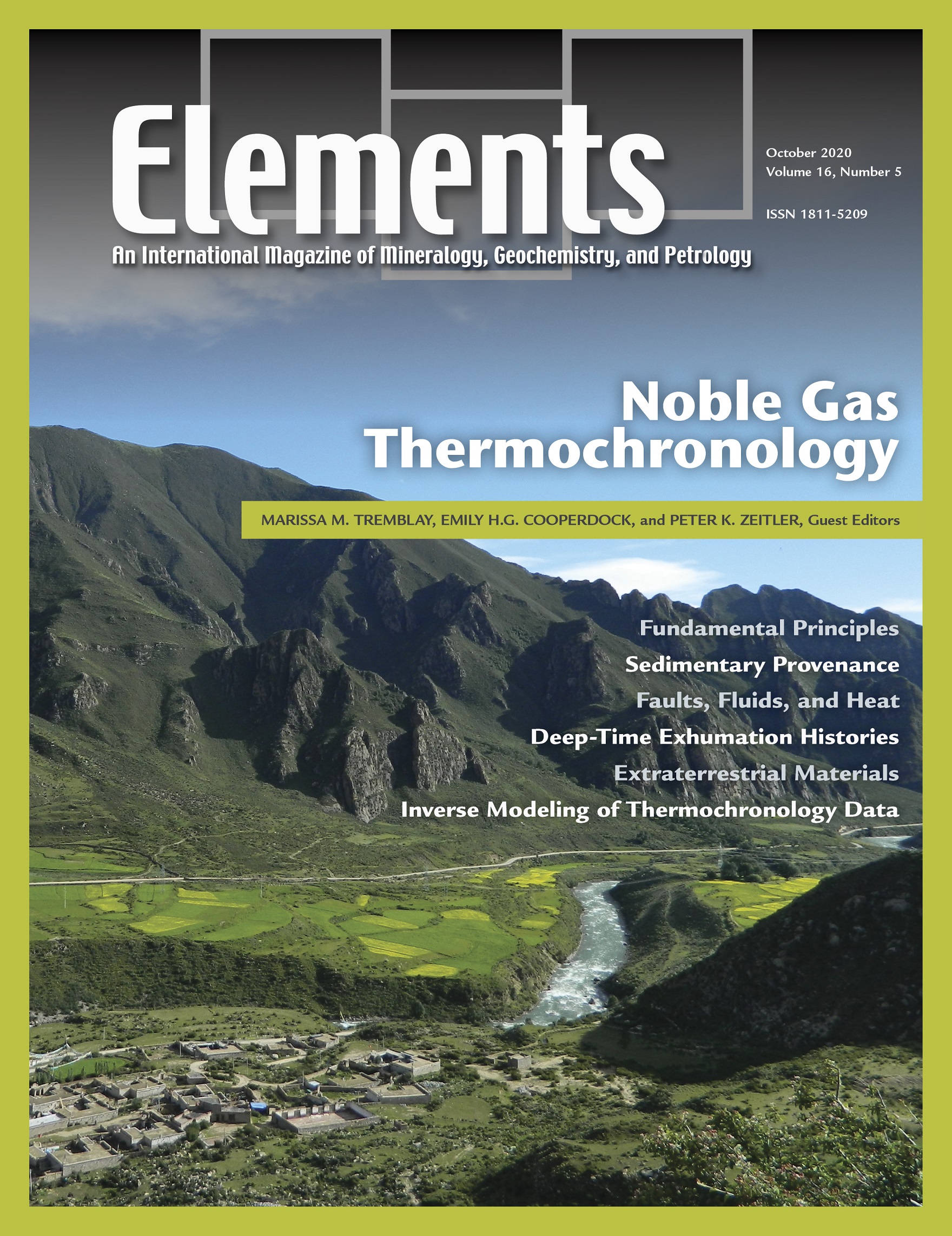
Noble Gas Thermochronology, October 2020, Vol. 16, No. 5
$20.00
Noble-gas thermochronology takes advantage of the time-dependent production of noble gases and the thermally activated diffusion of these gases to constrain the temperature histories of minerals found in crustal rocks. Thermochronology has become widely used to address research questions across Earth and planetary science.
Noble Gas Thermochronology
October 2020, Vol. 16, No. 5
Noble-gas thermochronology takes advantage of the time-dependent production of noble gases and the thermally activated diffusion of these gases to constrain the temperature histories of minerals found in crustal rocks. Thermochronology has become widely used to address research questions across Earth and planetary science. These questions include when and how valleys are cut by glaciers; from where sediment is sourced; what thermal conditions occur on fault planes during slip; and how the surfaces of planetary bodies evolve on billion-year timescales. This issue highlights how noble-gas thermochronology can be used to address questions like these, as well as what new avenues of research noble-gas thermochronology could be used for in the future.
Why You’ll Love Elements Magazine:
- Expert Contributors: Articles written by renowned researchers in the field of geoscience.
- Engaging Content: Join a community of readers who are passionate about Elements.
- Exceptional Quality: Each issue is printed on high-quality paper with stunning visuals and detailed illustrations that bring complex scientific concepts to life.
Order your copy of the October 2020 issue of Elements magazine today and delve into noble gas thermochronology.
Related products
-
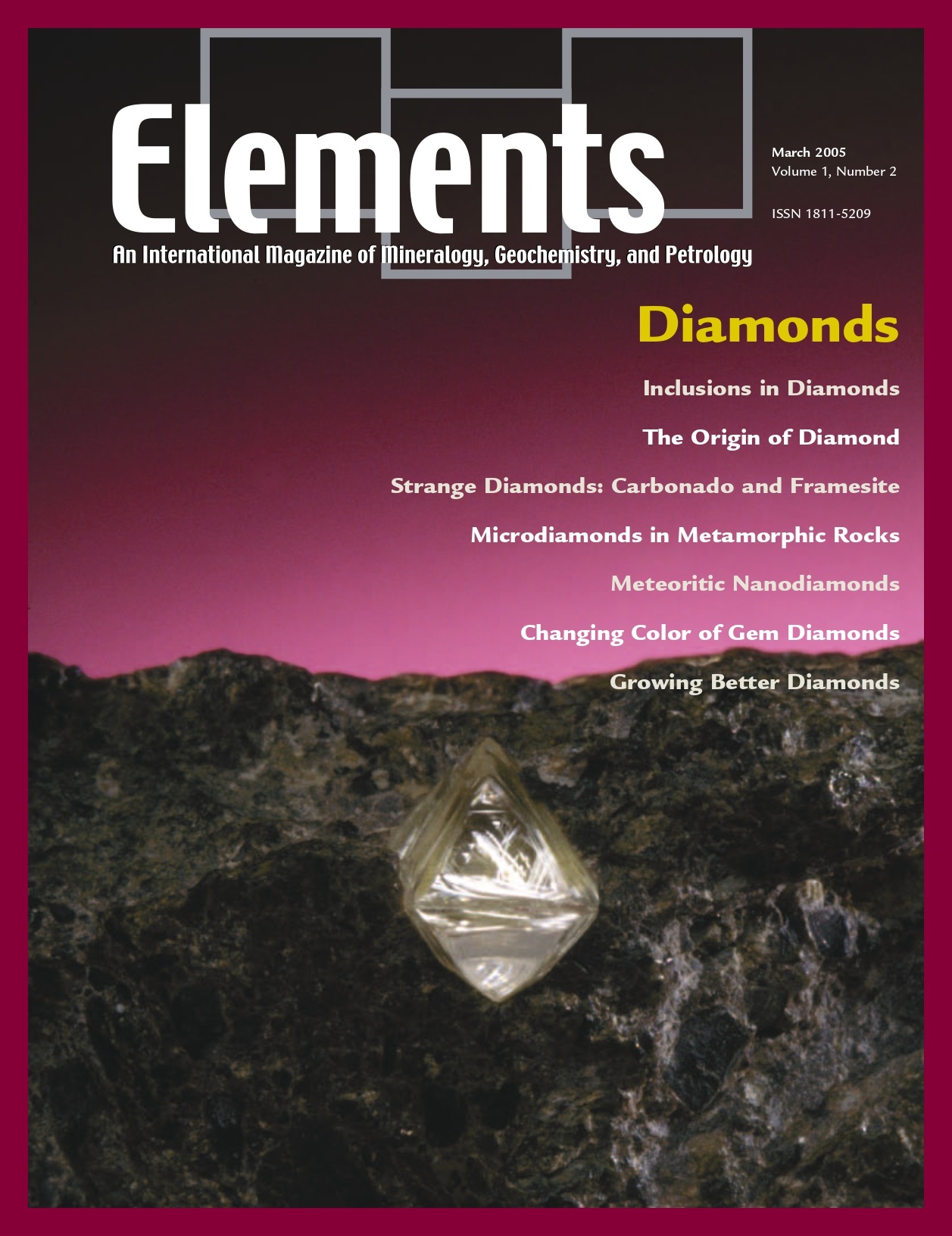
Diamonds, March 2005, Vol. 1, No. 2
$20.00Diamond, the fascinating ultrahard mineral, is the focus of considerable interest and scientific research. Recent advances particularly relevant to geoscientists include: diamond as a recorder of Earth processes from the perspective of inclusions, chemistry, and conditions of formation; synthesis for research applications and processing to modify color and physical properties, important to diamond gems and anvils; the implications of nanodiamonds from meteorites.
-
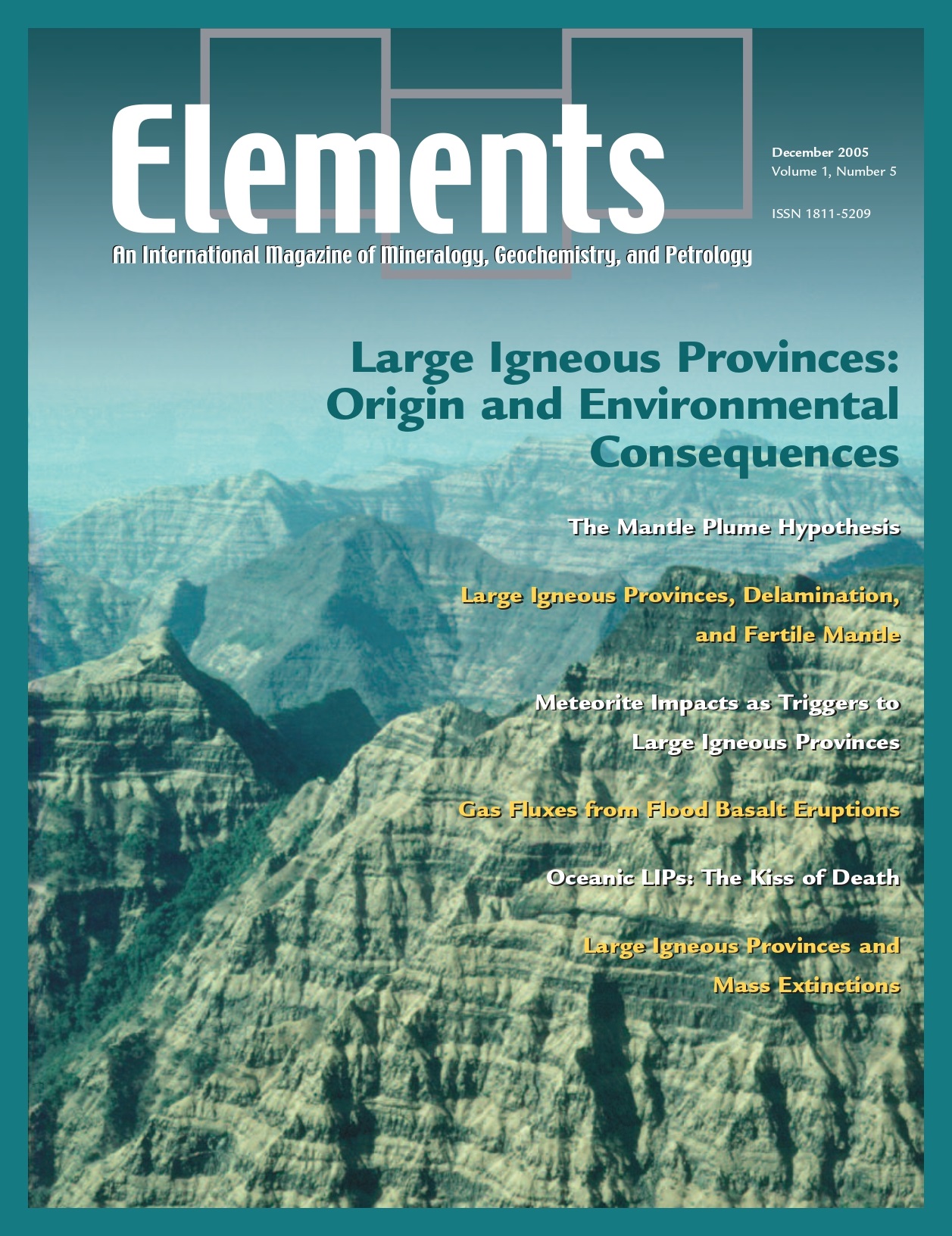
Large Igneous Provinces: Origin And Environmental Consequences, December 2005, Vol. 1, No. 5
$20.00Large igneous provinces record major outpourings of igneous rocks, both on the continents and in ocean basins. Their origin is still vigorously disputed, with models invoking mantle plumes, thermal effects of the lithosphere, and meteorite impacts.
-
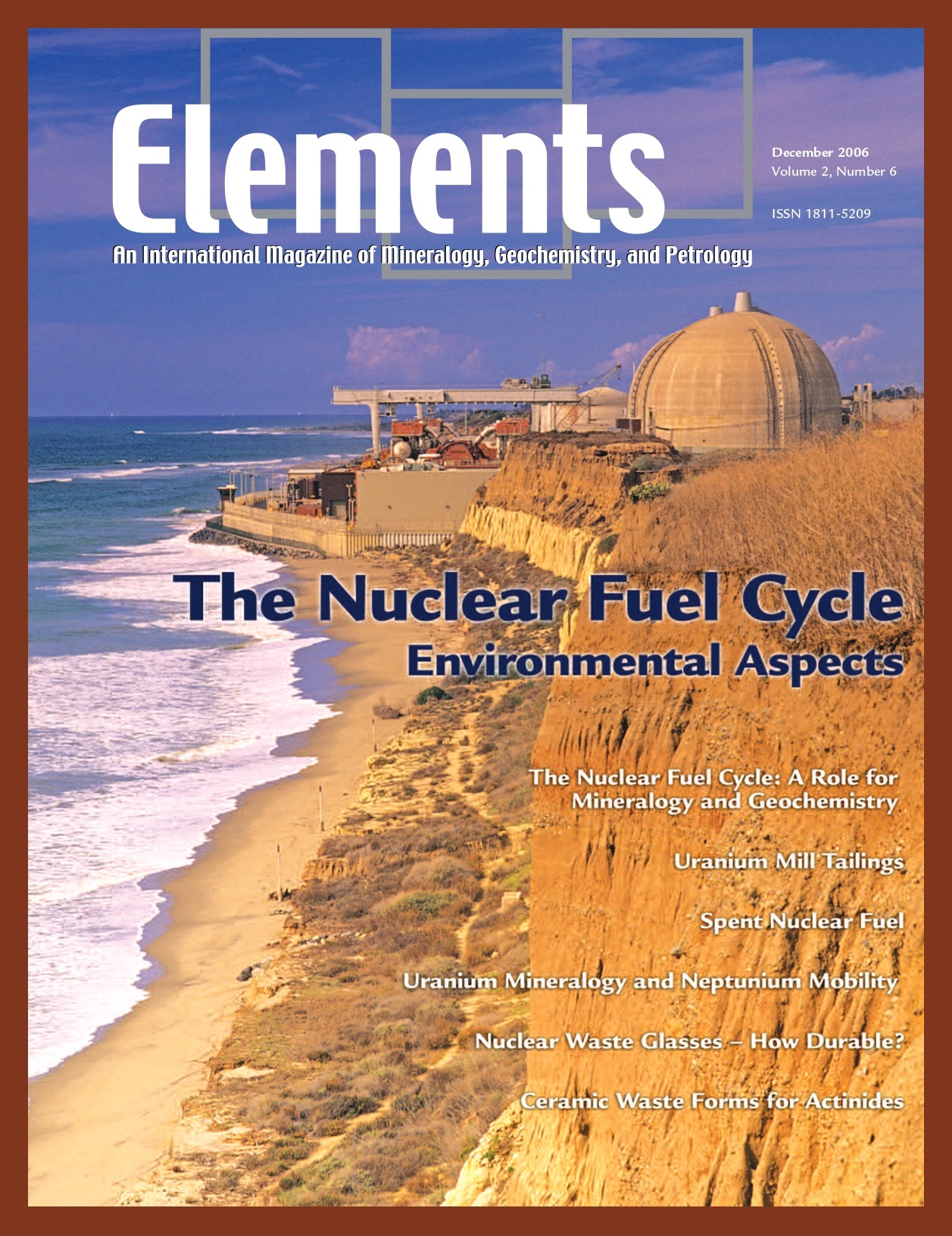
The Nuclear Fuel Cycle – Environmental Aspects, December 2006, Vol. 2, No. 6
$20.00Increasing concerns for the effects of global warming that result from rising greenhouse gas concentrations in the atmosphere have led to a reexamination, even enthusiasm, for nuclear power. Of all the current alternatives to fossil fuels, nuclear fission is the most important source of energy, accounting for 17 percent of the world’s electricity.