Planet Mercury, February 2019, Vol. 15, No. 1
June 28, 2024
South Aegean Volcanic Arc, June 2019, Vol. 15, No. 3
June 28, 2024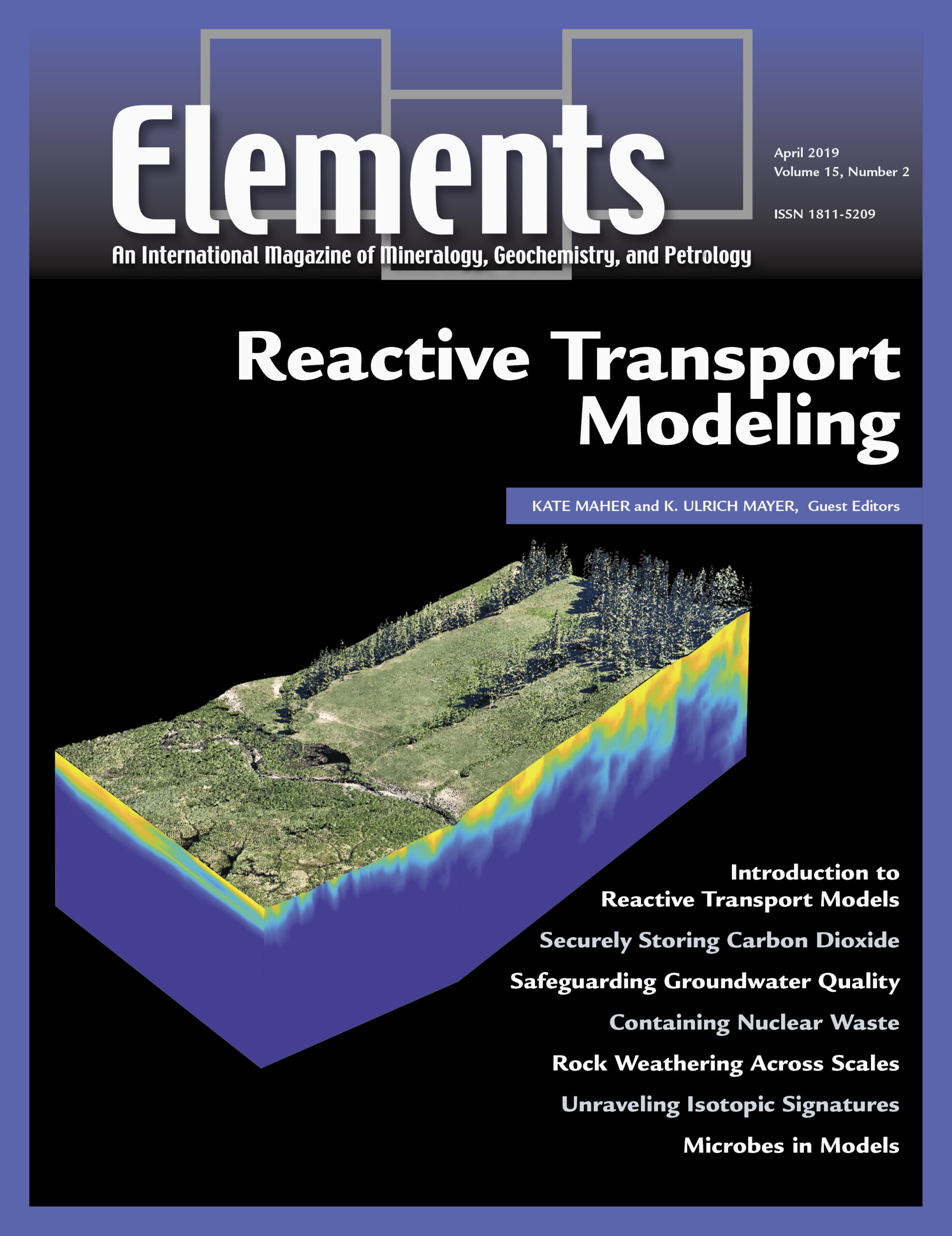
Reactive Transport Modeling, April 2019, Vol. 15, No. 2
$20.00
Reactive transport modeling, or computer simulations of the transfer of mass and energy through the subsurface, has become a central tool for understanding how Earth’s unique chemical environments are formed, how they function today, and how they might behave in the future. This process-based approach has enabled us to gain a new understanding of a diverse array of Earth processes, from biogeochemical cycles in marine sediments and the factors that control soil formation, to the evolution of contaminated groundwater systems and the engineered containment of nuclear waste.
Reactive Transport Modeling
April 2019, Vol. 15, No. 2
Reactive transport modeling, or computer simulations of the transfer of mass and energy through the subsurface, has become a central tool for understanding how Earth’s unique chemical environments are formed, how they function today, and how they might behave in the future. This process-based approach has enabled us to gain a new understanding of a diverse array of Earth processes, from biogeochemical cycles in marine sediments and the factors that control soil formation, to the evolution of contaminated groundwater systems and the engineered containment of nuclear waste. The diverse contributions in this issue highlight the unique role that reactive transport models have played in advancing our understanding of Earth’s shallow crustal environments and our human interactions with them.
Why You’ll Love Elements Magazine:
- Expert Contributors: Articles written by renowned researchers in the field of geoscience.
- Engaging Content: Join a community of readers who are passionate about Elements.
- Exceptional Quality: Each issue is printed on high-quality paper with stunning visuals and detailed illustrations that bring complex scientific concepts to life.
Order your copy of the April 2019 issue of Elements magazine today and delve into reactive transport modeling.
Related products
-
Glasses And Melts: Linking Geochemistry And Materials Science, October 2006, Vol. 2, No. 5
$20.00Geological interest in studying melts stems from early recognition that melts play a fundamental role in determining the physical and chemical behaviour of magmas and magmatic processes. However, due to the inherent difficulties associated with working at high temperatures, much of the geological research over the last 30 years has used quenched melts or glasses as proxies for melts themselves.
-
Nanogeoscience, December 2008, Vol. 4, No. 6
$20.00At first glance, nano and Earth seem about as far apart as one can imagine. Nanogeoscience seems to be a word connecting opposites.
-
Toxic Metals In The Environment: The Role Of Surfaces, September 2005, Vol. 1, No. 4
$20.00Metals are prevalent in the environment. They are derived from both natural and anthropogenic sources.