Arsenic, April 2006, Vol. 2, No. 2
June 28, 2024
Early Earth, August 2006, Vol. 2, No. 4
June 28, 2024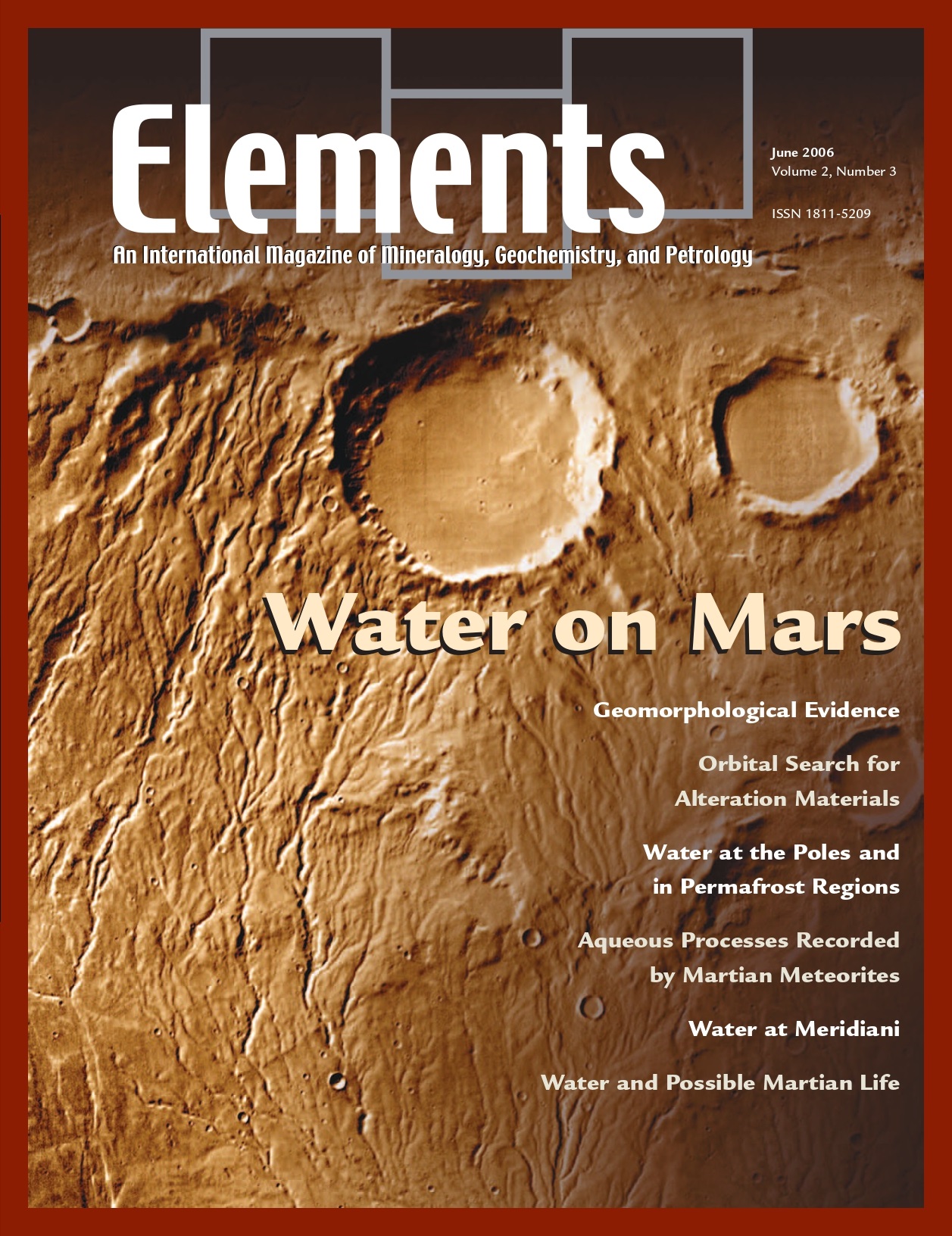
Water On Mars, June 2006, Vol. 2, No. 3
$20.00
During the past several decades, spacecraft data have transformed the planets from astronomical objects into geologic worlds. Mars is the current focus of planetary exploration, and NASA’s objectives for this effort are based on the theme, “follow the water.
Water On Mars
June 2006, Vol. 2, No. 3
During the past several decades, spacecraft data have transformed the planets from astronomical objects into geologic worlds. Mars is the current focus of planetary exploration, and NASA’s objectives for this effort are based on the theme, “follow the water.” This issue addresses new discoveries from spacecraft and from Martian meteorites about where water or ice was (or is) located and about the role of water in determining the mineralogy, petrology, and geochemistry of the Martian surface.
Why You’ll Love Elements Magazine:
- Expert Contributors: Articles written by renowned researchers in the field of geoscience.
- Engaging Content: Join a community of readers who are passionate about Elements.
- Exceptional Quality: Each issue is printed on high-quality paper with stunning visuals and detailed illustrations that bring complex scientific concepts to life.
Order your copy of the June 2006 issue of Elements magazine today and find out about the water on Mars.
Related products
-
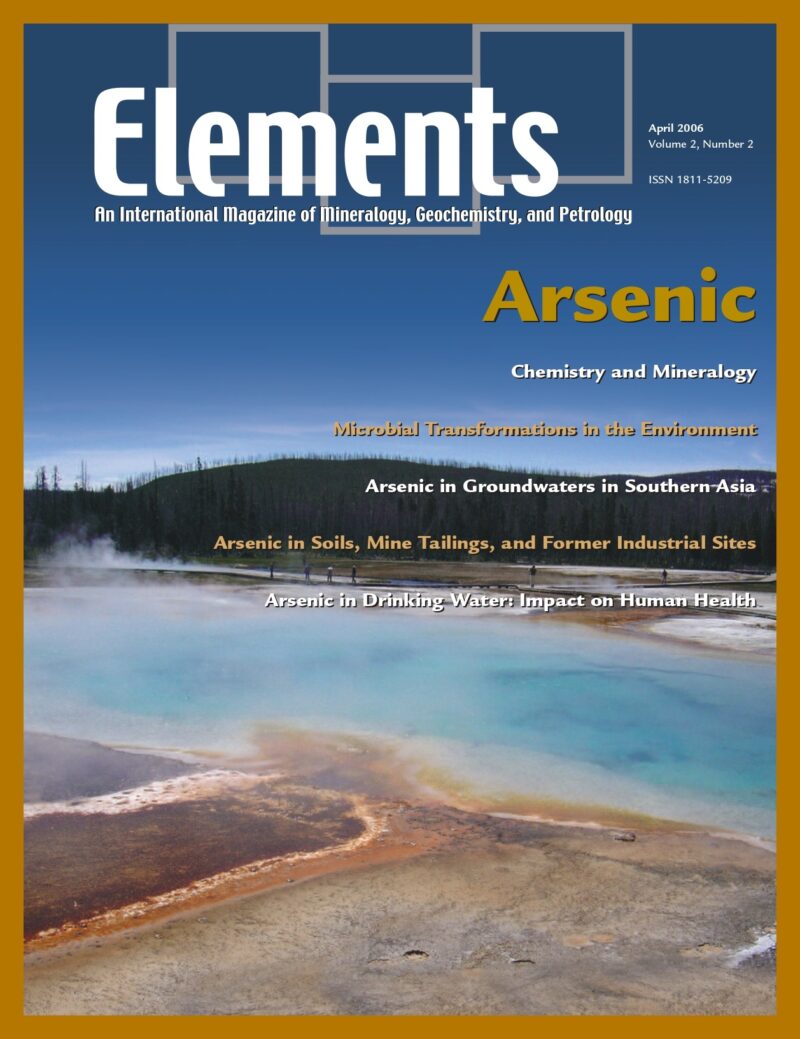
Arsenic, April 2006, Vol. 2, No. 2
$20.00Arsenic is an element known throughout history as a classic poison. Currently, very small but highly significant concentrations of this element in drinking water supplies are causing massive health problems to many millions of people in some of the world’s poorest nations, and more localised sources related to mining and processing are also a concern.
-
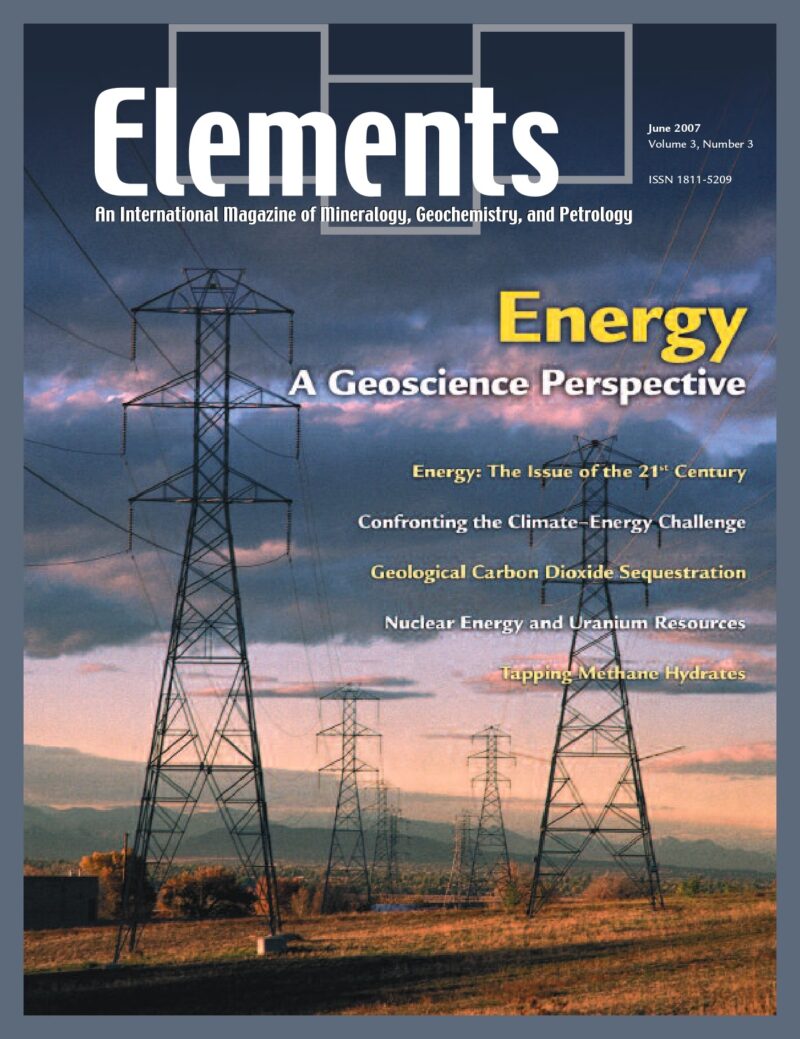
Energy: A Geoscience Perspective, June 2007, Vol. 3, No. 3
$20.00The issue of energy resources in the future may be one of the most important in the 21st century. Future climate change and the ways to abate it while still supplying needed energy will impact future political relations, world economics, human health, and the environment.
-
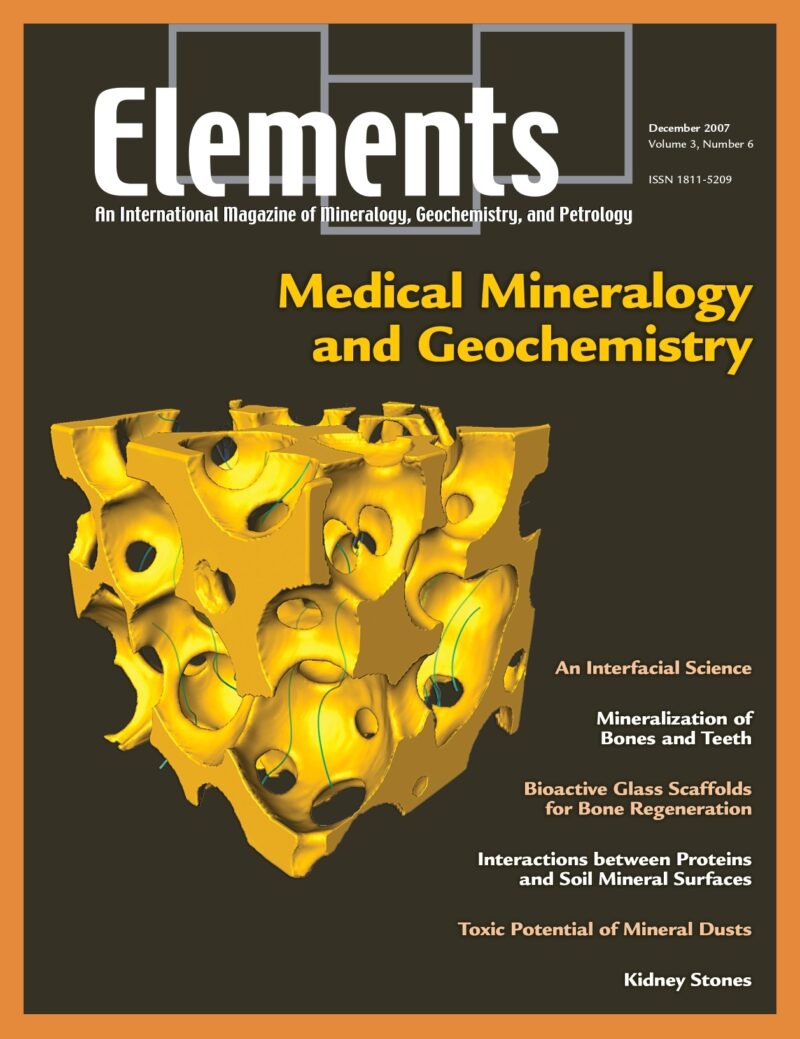
Medical Mineralogy And Geochemistry, December 2007, Vol. 3, No. 6
$20.00Medical mineralogy and geochemistry is an emergent, highly interdisciplinary field concerned with both normal and pathological interactions between minerals or amorphous inorganic solids and biomolecules or cells within the human body, and the transport and fate of prions and protein toxins in the soil environment. Prior research has, appropriately, focused on the complex genetic and molecular biological aspects, but there is a growing recognition of the vital need for understanding the surface and bulk properties and reactivities, especially at the challenging nanoscale characteristic of biomacromolecules and biominerals.