Stromatolites and Other Microbialites, June 2026, Vol. 22, No. 4
November 12, 2026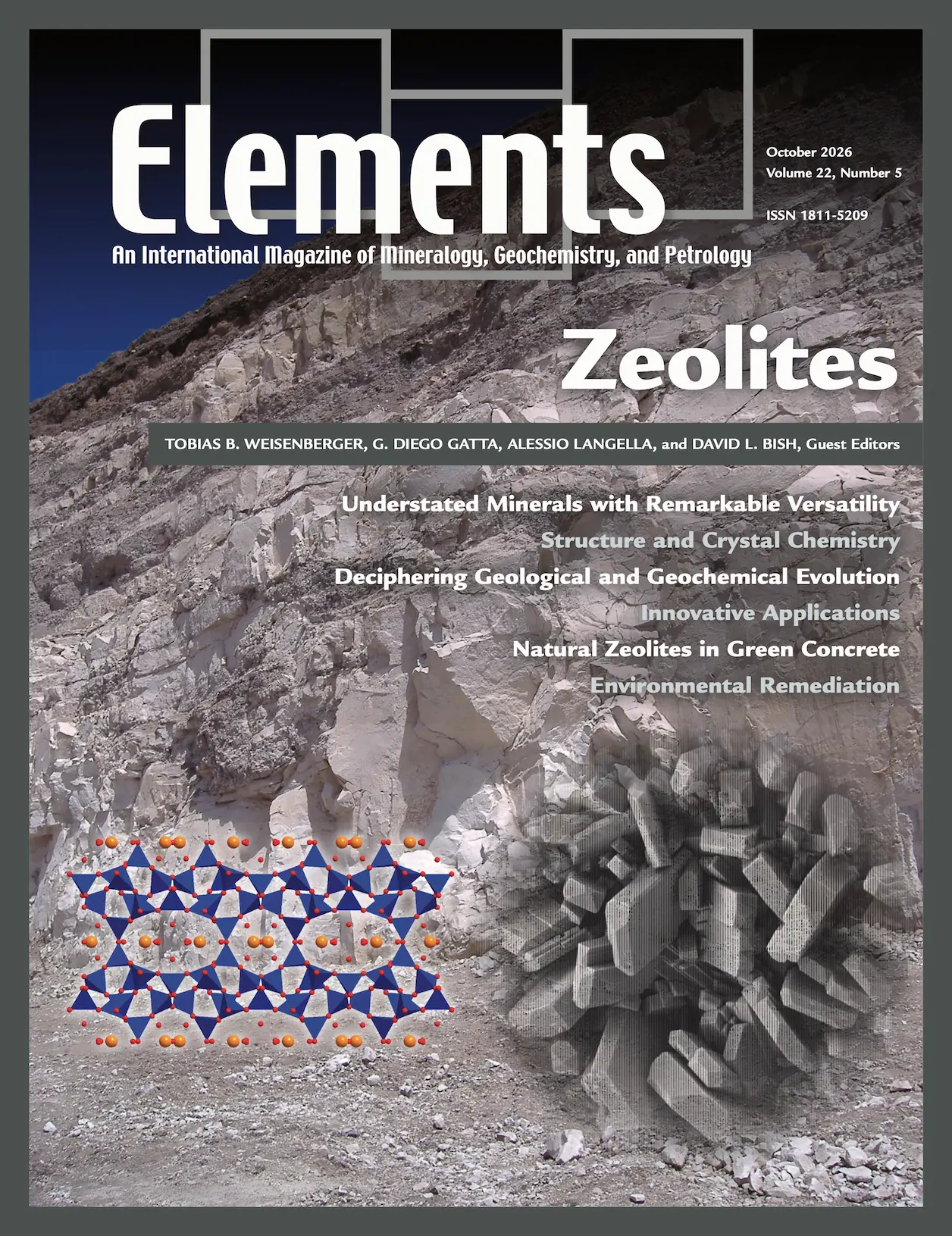
Zeolites, June 2026, Vol. 22, No. 5
$20.00
Discover the versatile world of zeolites—understated microporous minerals with remarkable technological and environmental significance. This issue of Elements examines their intricate crystal chemistry, their power to decode geological and geochemical evolution, and their innovative applications in green concrete and environmental remediation. Uncover how natural and synthetic zeolites are driving sustainable solutions for our modern world.
Zeolites
October 2026, Vol. 22, No. 5
Zeolites are hydrated aluminosilicate minerals defined by their intricate, microporous frameworks of channels and cages. Often described as understated minerals with extraordinary versatility, their open crystal architectures accommodate exchangeable cations and water molecules, endowing them with remarkable molecular-sieving, catalytic, and ion-exchange capabilities that make them one of the most widely studied and applied mineral groups.
Beyond their geological fascination, zeolites are indispensable to environmental engineering and sustainable industry. Both natural and synthetic zeolites are at the heart of green technology—serving critical roles in wastewater treatment, soil remediation, toxic waste containment, and the production of low-carbon “green concrete,” helping combat climate change and environmental degradation.
This issue of Elements, guest-edited by Tobias B. Weisenberger, G. Diego Gatta, Alessio Langella, and David L. Bish, presents a thorough overview of zeolites. The issue covers their detailed crystal chemistry, explains how they serve as indicators to decipher complex geological and geochemical evolution, and explores their groundbreaking real-world applications in sustainability and remediation.
Why You’ll Love Zeolites:
- Marvel at Crystal Architecture: Explore the remarkable crystal chemistry, microporous structures, and open frameworks that make zeolites nature’s ultimate molecular sieves.
- Decode Geological Evolution: Discover how zeolite mineral assemblages record the thermal, diagenetic, and geochemical histories of volcanic and sedimentary basins.
- Pioneer Sustainable Solutions: Examine real-world green technologies, including the use of natural zeolites as eco-friendly binders in green concrete.
- Advanced Environmental Remediation: Learn how zeolites clean up polluted environments through targeted ion-exchange and pollutant capture.
Expand your understanding of these versatile microporous minerals and discover how zeolites connect deep-Earth geochemical processes with technologies that power a cleaner, greener future.
Related products
-
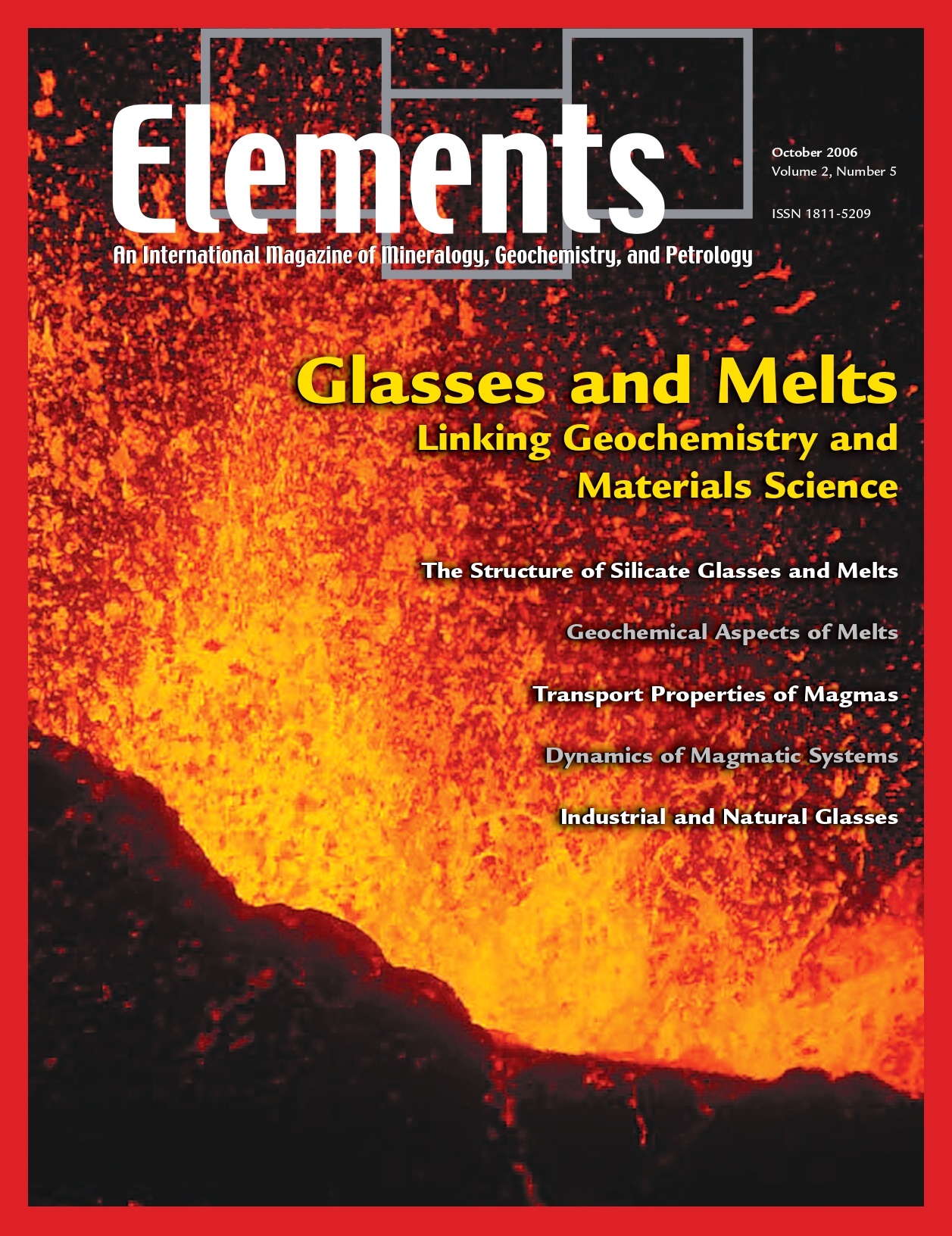
Glasses And Melts: Linking Geochemistry And Materials Science, October 2006, Vol. 2, No. 5
$20.00Geological interest in studying melts stems from early recognition that melts play a fundamental role in determining the physical and chemical behaviour of magmas and magmatic processes. However, due to the inherent difficulties associated with working at high temperatures, much of the geological research over the last 30 years has used quenched melts or glasses as proxies for melts themselves.
-
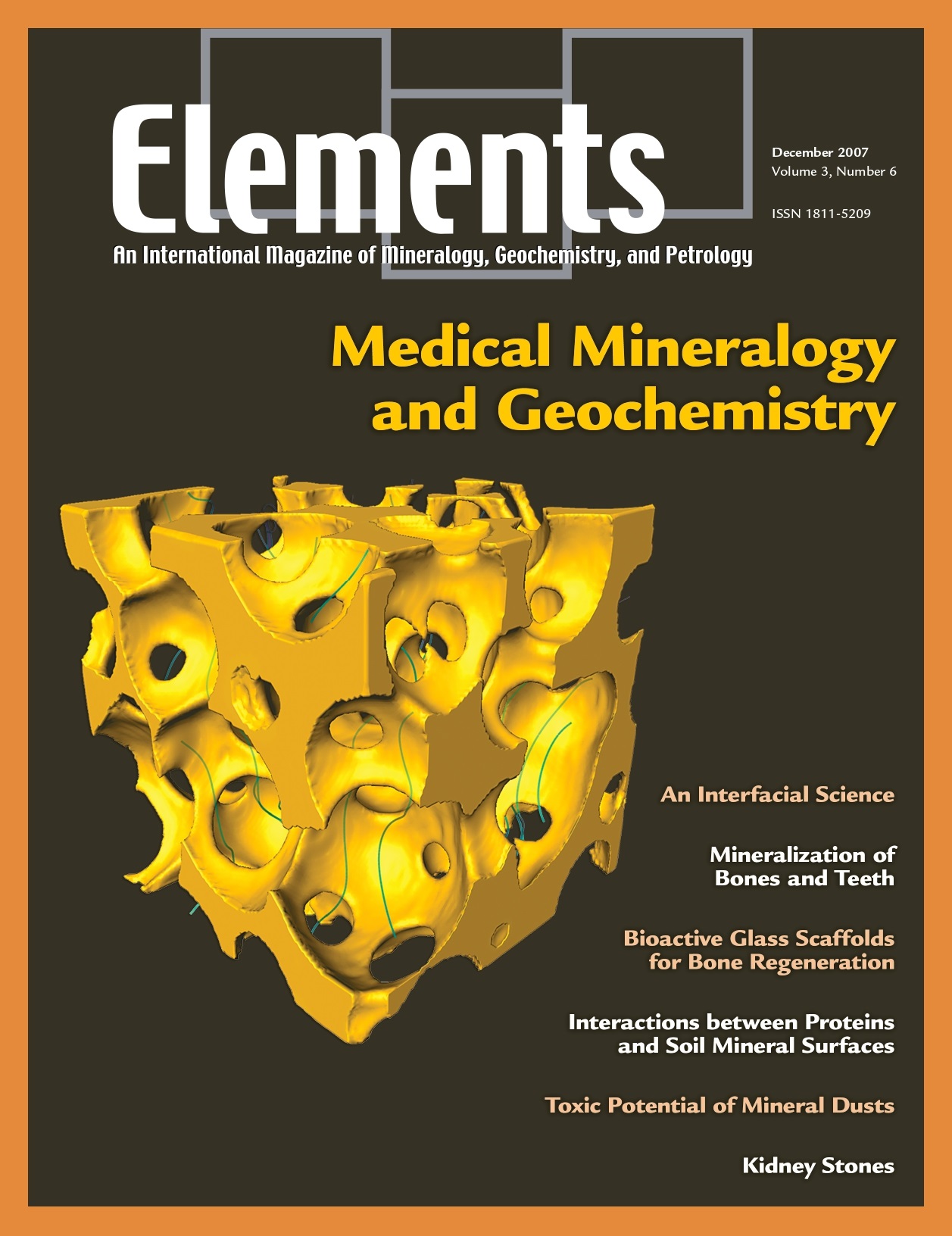
Medical Mineralogy And Geochemistry, December 2007, Vol. 3, No. 6
$20.00Medical mineralogy and geochemistry is an emergent, highly interdisciplinary field concerned with both normal and pathological interactions between minerals or amorphous inorganic solids and biomolecules or cells within the human body, and the transport and fate of prions and protein toxins in the soil environment. Prior research has, appropriately, focused on the complex genetic and molecular biological aspects, but there is a growing recognition of the vital need for understanding the surface and bulk properties and reactivities, especially at the challenging nanoscale characteristic of biomacromolecules and biominerals.
-
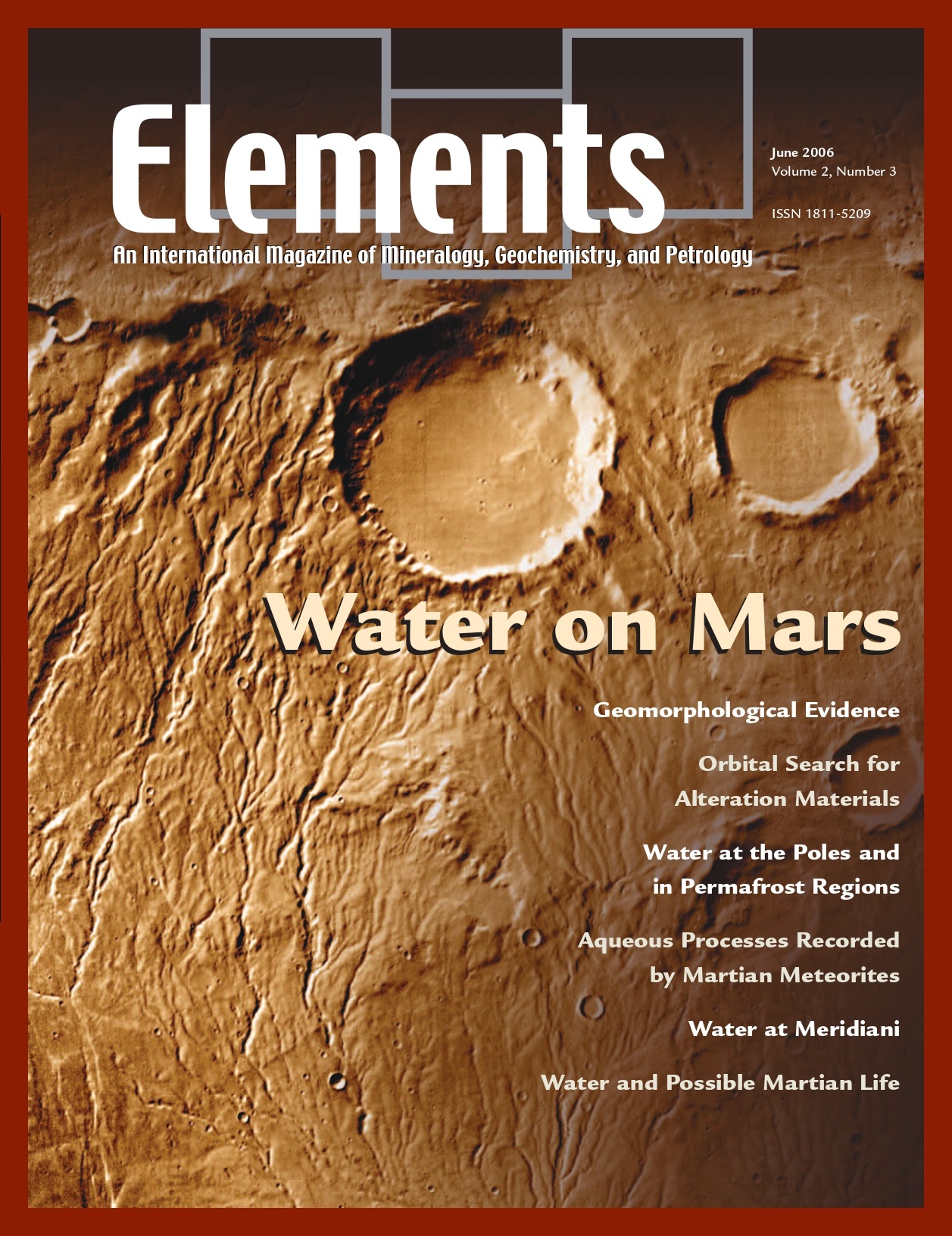
Water On Mars, June 2006, Vol. 2, No. 3
$20.00During the past several decades, spacecraft data have transformed the planets from astronomical objects into geologic worlds. Mars is the current focus of planetary exploration, and NASA’s objectives for this effort are based on the theme, “follow the water.