Frontiers In Textural And Microgeochemical Analysis, August 2007, Vol. 3, No. 4
June 28, 2024
Medical Mineralogy And Geochemistry, December 2007, Vol. 3, No. 6
June 28, 2024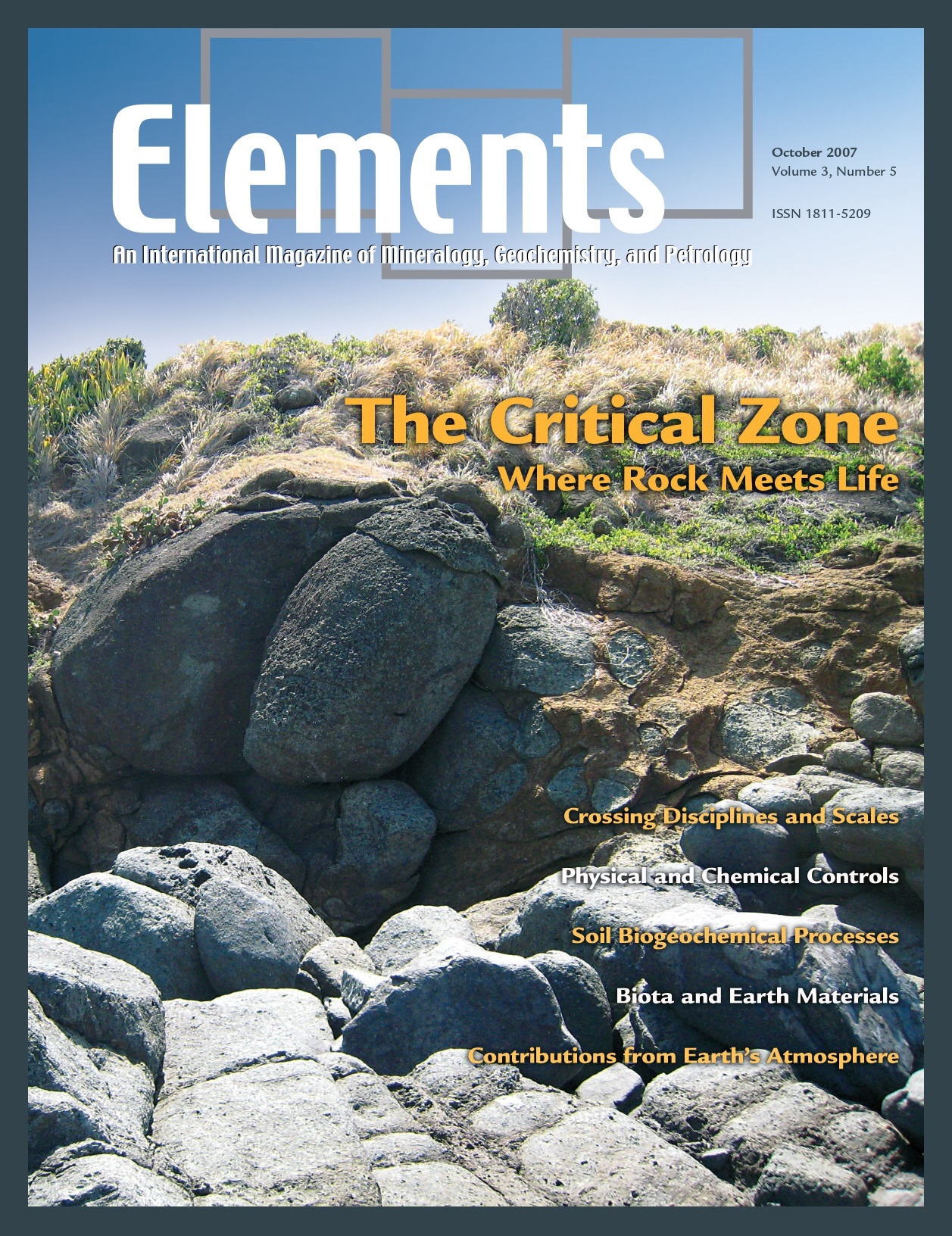
The Critical Zone, October 2007, Vol. 3, No. 5
$20.00
The Critical Zone (CZ) encompasses all fluid, mineral, gaseous, and biotic components from the outer envelope of vegetation down to the lower limit of groundwater. It supports much of life on Earth.
The Critical Zone
October 2007, Vol. 3, No. 5
The Critical Zone (CZ) encompasses all fluid, mineral, gaseous, and biotic components from the outer envelope of vegetation down to the lower limit of groundwater. It supports much of life on Earth. Important, relevant societal challenges related to CZ science to be addressed in the next decade are: (1) what processes control fluxes of carbon, particulates, and other reactive gases into and from the CZ? (2) how do weathering processes in the CZ nourish ecosystems? (3) how do chemical and physical weathering processes shape the CZ? and (4) how do biogeochemical processes in the CZ govern long-term sustainability of water and soil resources?
Why You’ll Love Elements Magazine:
- Expert Contributors: Articles written by renowned researchers in the field of geoscience.
- Engaging Content: Join a community of readers who are passionate about Elements.
- Exceptional Quality: Each issue is printed on high-quality paper with stunning visuals and detailed illustrations that bring complex scientific concepts to life.
Order your copy of the October 2007 issue of Elements magazine today and explore the critical zone.
Related products
-
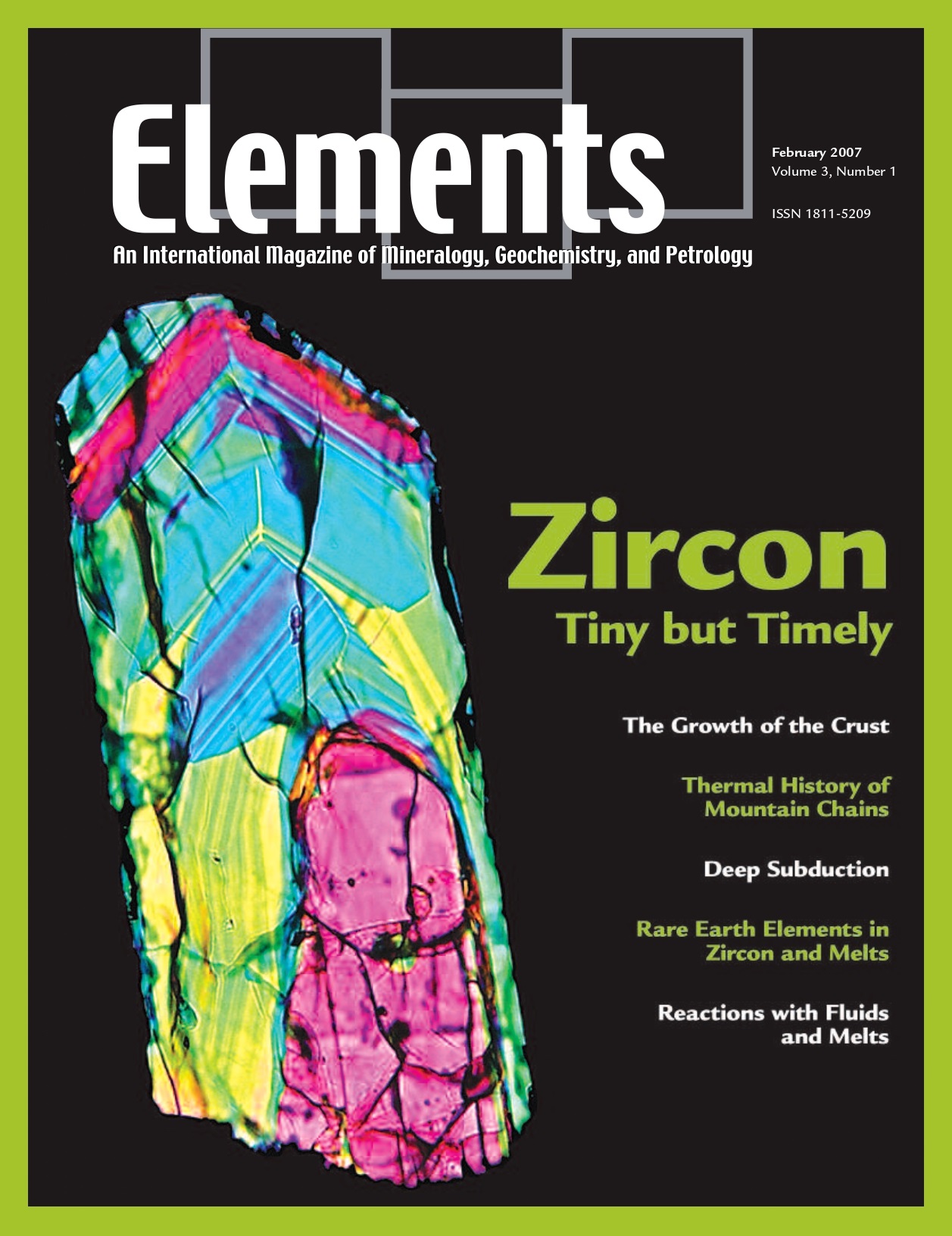
Zircon – Tiny But Timely, February 2007, Vol. 3, No. 1
$20.00Where would Earth science be without zircon? As Earth’s timekeeper, zircon has proven to be a remarkable and versatile mineral, providing insights into deep time and ancient Earth processes. However, there is still much to learn about Earth’s history from zircon and its behaviour.
-
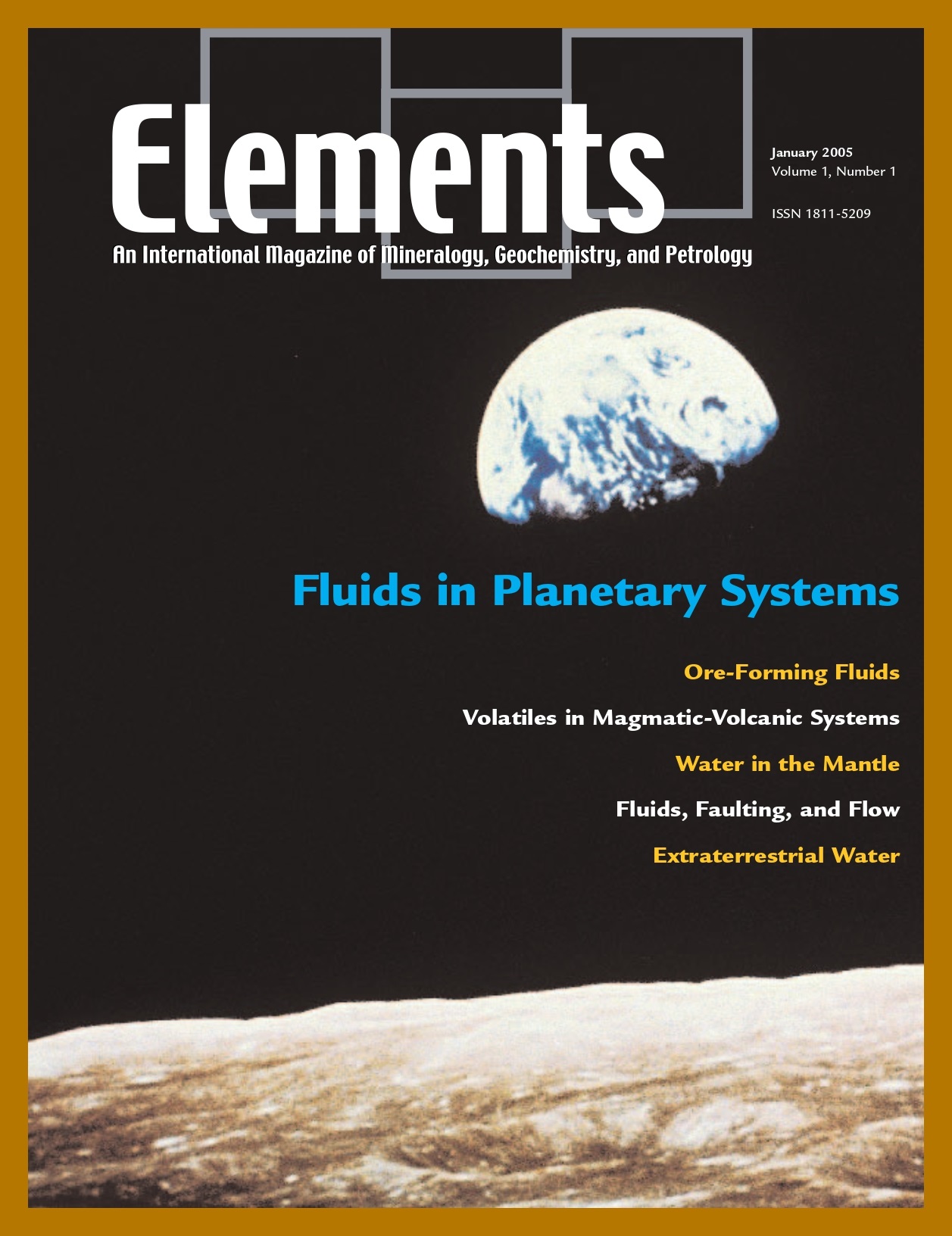
Fluids in Planetary Systems, January 2005, Vol. 1, No. 1
$20.00Water and other geofluids play an important role in the geochemical and rheological evolution of the Earth and other bodies in the solar system. These fluids are responsible for the formation of hydrothermal mineral deposits, affect eruption behavior in volcanic systems and the geophysical properties of the mantle, and significantly affect the way in which rocks deform and fracture.
-
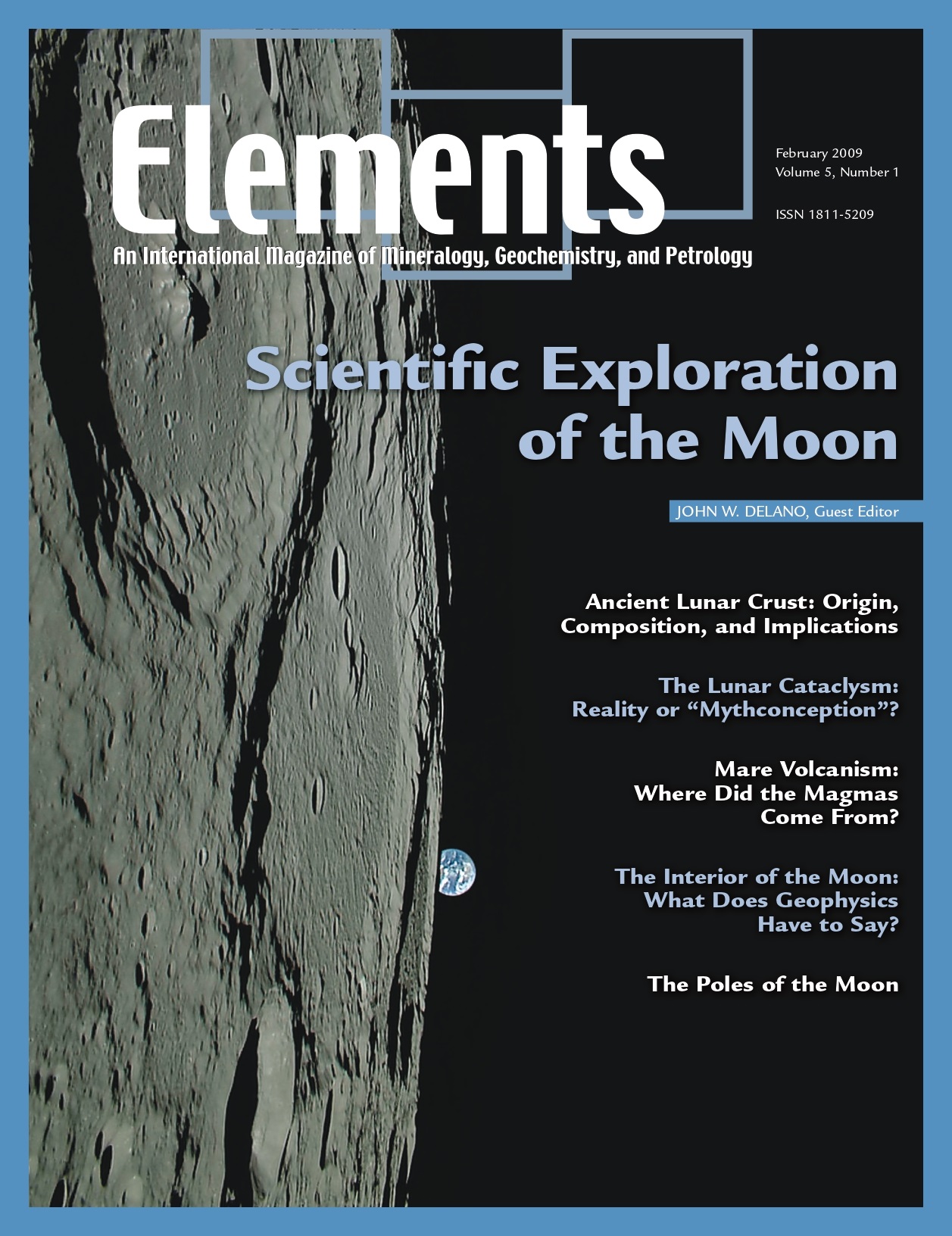
Scientific Exploration Of The Moon, February 2009, Vol. 5, No. 1
$20.00Our current understanding of the Moon’s history, interior structure, and chemical composition is based in large part on geochemical data acquired from samples from the U.S.