Metal Stable Isotopes, December 2009, Vol. 5, No. 6
June 28, 2024
Sulfur, April 2010, Vol. 6, No. 2
June 28, 2024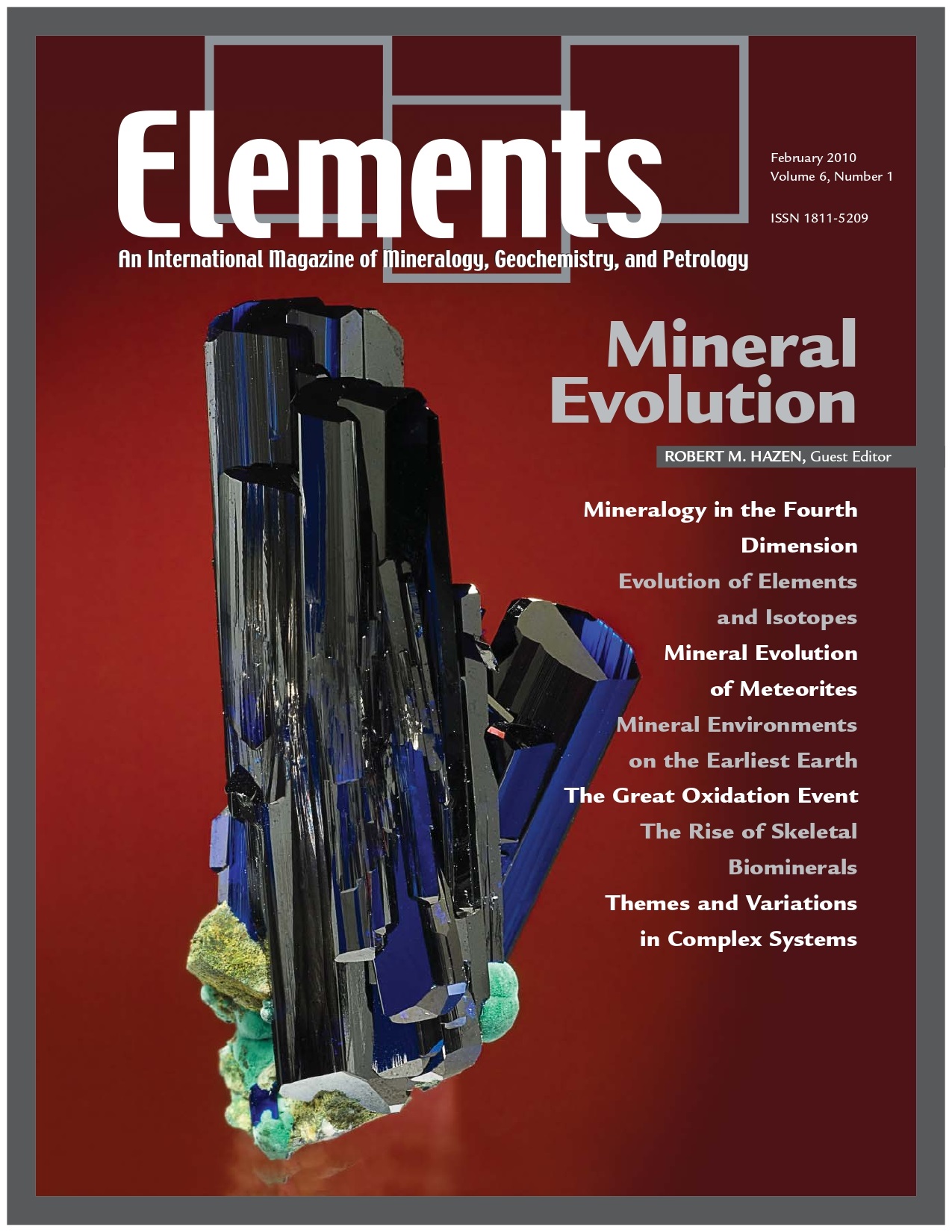
Mineral Evolution, February 2010, Vol. 6, No. 1
$20.00
“Mineral evolution,” the study of Earth’s changing near-surface mineralogy, frames Earth materials research with a historical narrative. This 4.
Mineral Evolution
February 2010, Vol. 6, No. 1
“Mineral evolution,” the study of Earth’s changing near-surface mineralogy, frames Earth materials research with a historical narrative. This 4.5-billion-year story integrates themes of planetary science, including geodynamics, petrology, geochemistry, thermodynamics, geobiology, and more. Mineralogy thus holds the key to unlocking our planet’s history and assumes its rightful central role in the Earth sciences. The mineralogy of terrestrial planets evolves as a consequence of physical, chemical, and biological processes. Starting with ~12 refractory minerals in prestellar molecular clouds, processes in the solar nebula led to the ~250 different minerals found in meteorites. Initial mineral evolution of Earth’s crust depended on a sequence of geochemical and petrologic processes that resulted in an estimated 1500 different mineral species. Ultimately, biological processes produced large-scale changes in atmospheric and ocean chemistry that may be responsible, directly or indirectly, for most of Earth’s 4400 known mineral species. Mineral evolution thus highlights the coevolution of the geo and biospheres.
Why You’ll Love Elements Magazine:
- Expert Contributors: Articles written by renowned researchers in the field of geoscience.
- Engaging Content: Join a community of readers who are passionate about Elements.
- Exceptional Quality: Each issue is printed on high-quality paper with stunning visuals and detailed illustrations that bring complex scientific concepts to life.
Order your copy of the February 2010 issue of Elements magazine today and learn about mineral evolution.
Related products
-
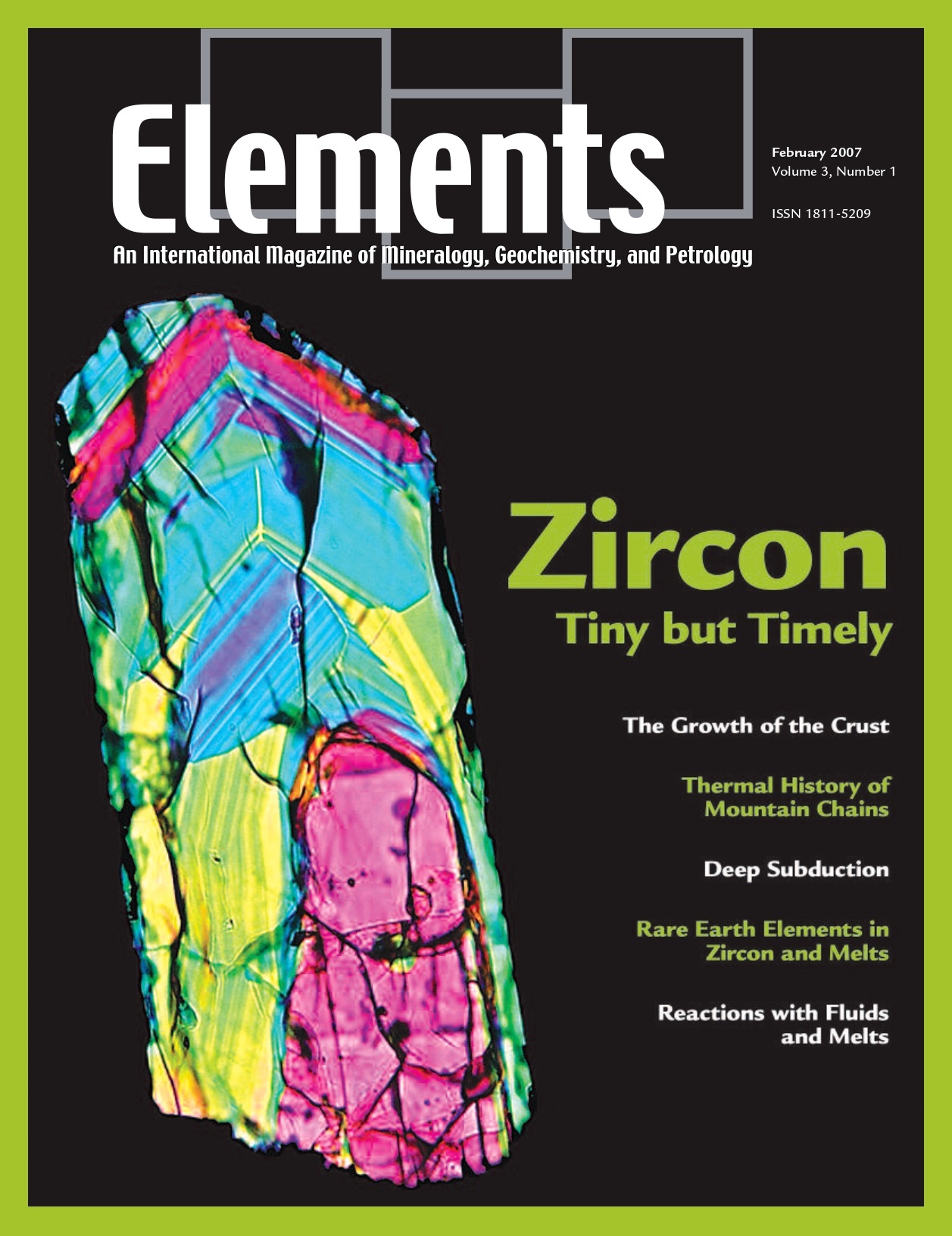
Zircon – Tiny But Timely, February 2007, Vol. 3, No. 1
$20.00Where would Earth science be without zircon? As Earth’s timekeeper, zircon has proven to be a remarkable and versatile mineral, providing insights into deep time and ancient Earth processes. However, there is still much to learn about Earth’s history from zircon and its behaviour.
-
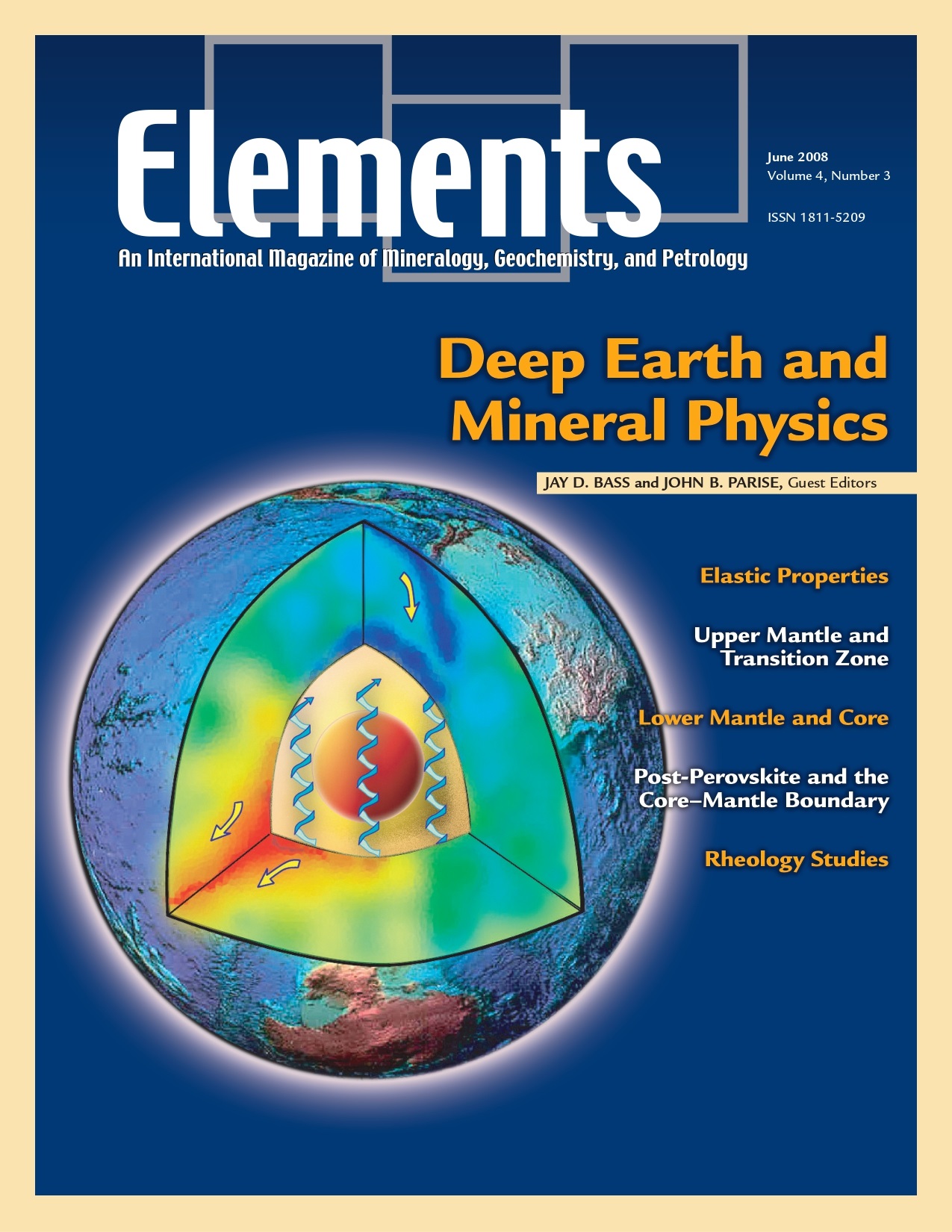
Deep Earth And Mineral Physics, June 2008, Vol. 4, No. 3
$20.00The field of high-pressure mineral physics is central to our understanding of the Earth’s interior and its evolution. It is also a field that is rapidly advancing.
-
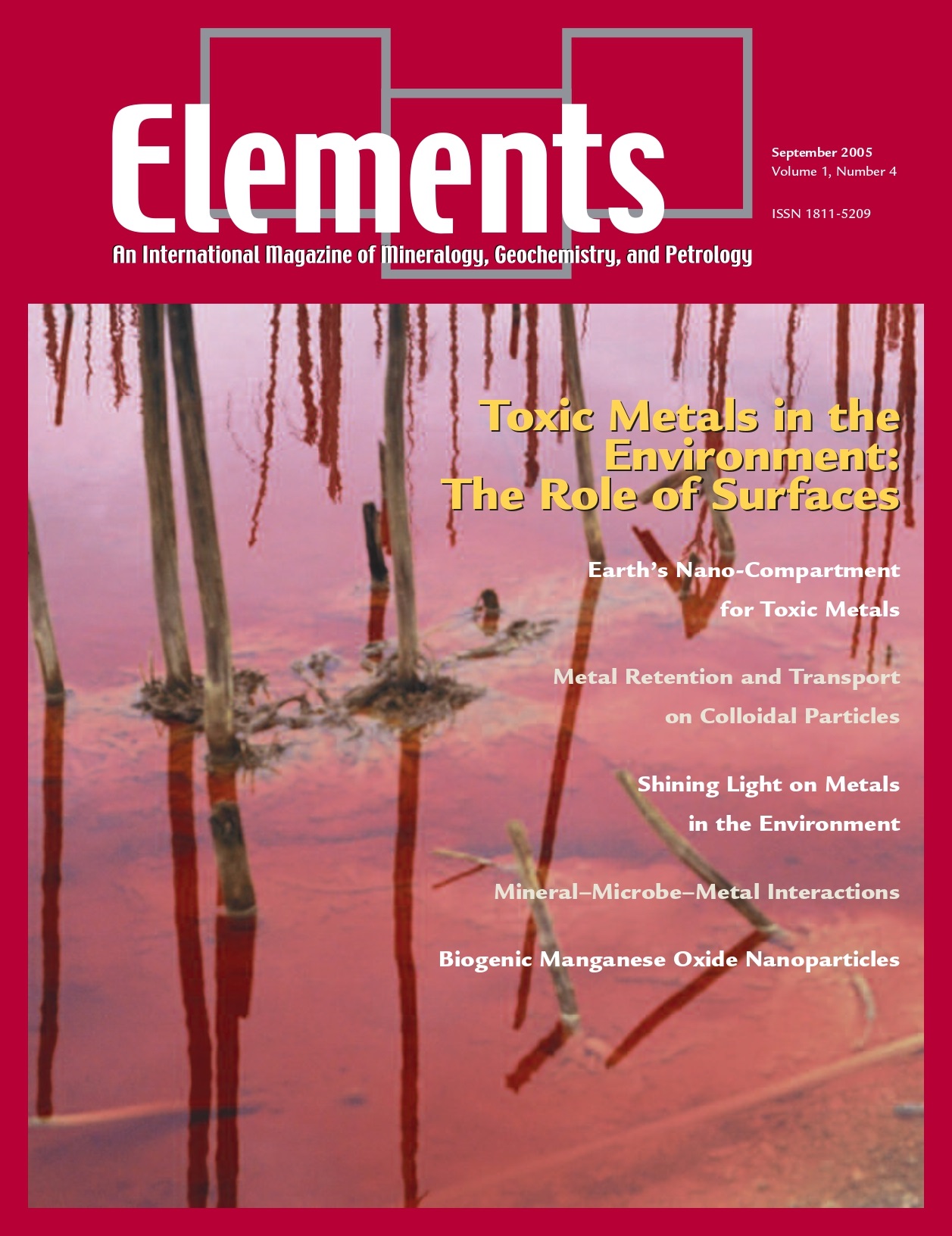
Toxic Metals In The Environment: The Role Of Surfaces, September 2005, Vol. 1, No. 4
$20.00Metals are prevalent in the environment. They are derived from both natural and anthropogenic sources.