The Nuclear Fuel Cycle – Environmental Aspects, December 2006, Vol. 2, No. 6
June 28, 2024
On The Cutting Edge: Teaching Mineralogy, Petrology, And Geochemistry, April 2007, Vol. 3, No. 2
June 28, 2024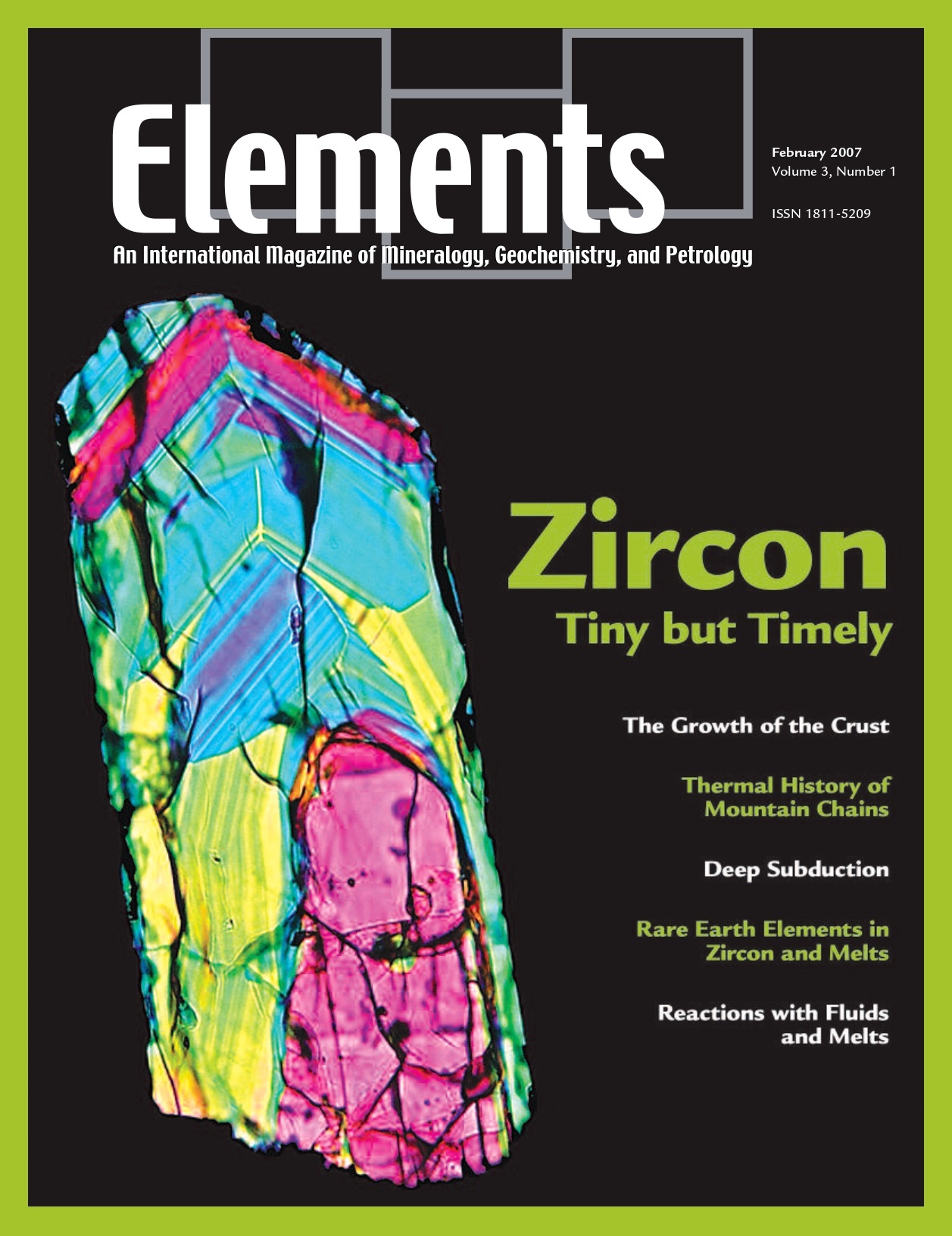
Zircon – Tiny But Timely, February 2007, Vol. 3, No. 1
$20.00
Where would Earth science be without zircon? As Earth’s timekeeper, zircon has proven to be a remarkable and versatile mineral, providing insights into deep time and ancient Earth processes. However, there is still much to learn about Earth’s history from zircon and its behaviour.
Zircon – Tiny But Timely
February 2007, Vol. 3, No. 1
Where would Earth science be without zircon? As Earth’s timekeeper, zircon has proven to be a remarkable and versatile mineral, providing insights into deep time and ancient Earth processes. However, there is still much to learn about Earth’s history from zircon and its behaviour. Zircon cannot be treated simply as a passive “safehouse” of stored isotopic and chemical information but must instead be interpreted carefully, in its petrological, mineralogical, and geological contexts, and in the light of all possible lines of evidence. Zircon has been a wonderful servant in our quest to unravel the history of the Earth—and has so much more to offer as we unlock the secrets of its chemical and physical responses to the processes operating in the Earth.
Why You’ll Love Elements Magazine:
- Expert Contributors: Articles written by renowned researchers in the field of geoscience.
- Engaging Content: Join a community of readers who are passionate about Elements.
- Exceptional Quality: Each issue is printed on high-quality paper with stunning visuals and detailed illustrations that bring complex scientific concepts to life.
Order your copy of the February 2007 issue of Elements magazine today and discover why zircon is tiny but timely.
Related products
-
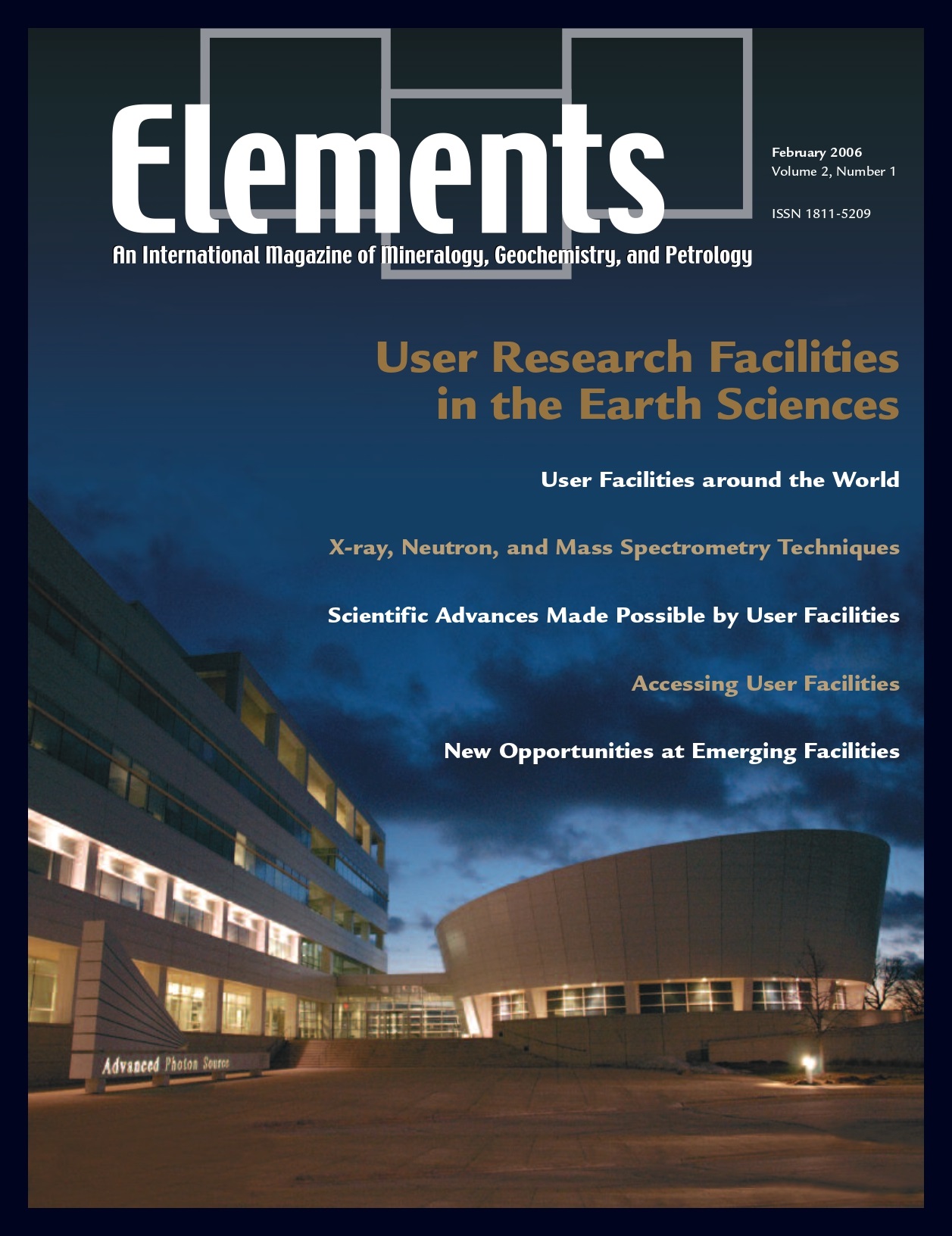
User Research Facilities In The Earth Sciences, February 2006, Vol. 2, No. 1
$20.00Earth scientists rely on effective access to user research facilities that provide state-of-the-art analytical instrumentation. This thematic issue focuses on some of these facilities and how to use them.
-
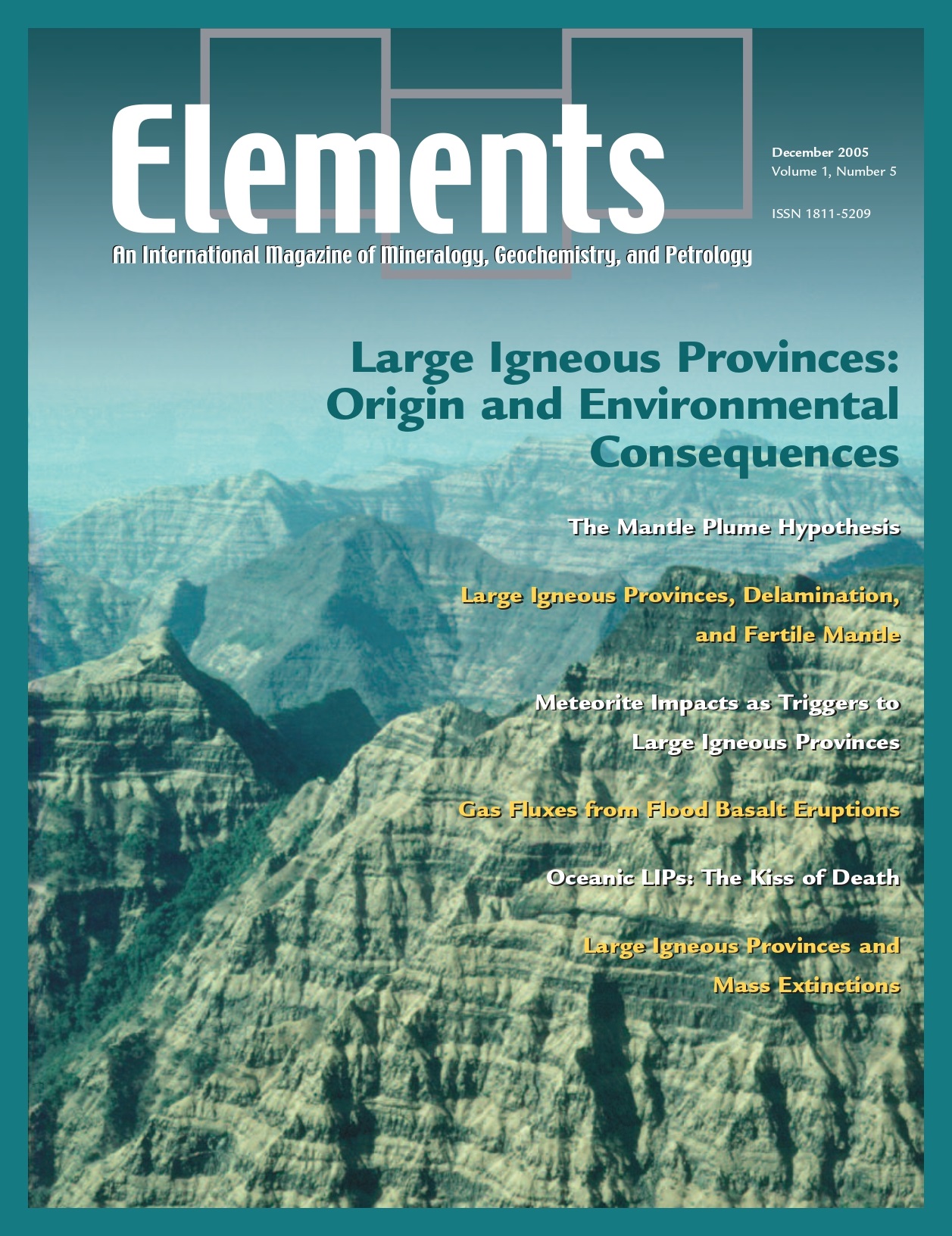
Large Igneous Provinces: Origin And Environmental Consequences, December 2005, Vol. 1, No. 5
$20.00Large igneous provinces record major outpourings of igneous rocks, both on the continents and in ocean basins. Their origin is still vigorously disputed, with models invoking mantle plumes, thermal effects of the lithosphere, and meteorite impacts.
-
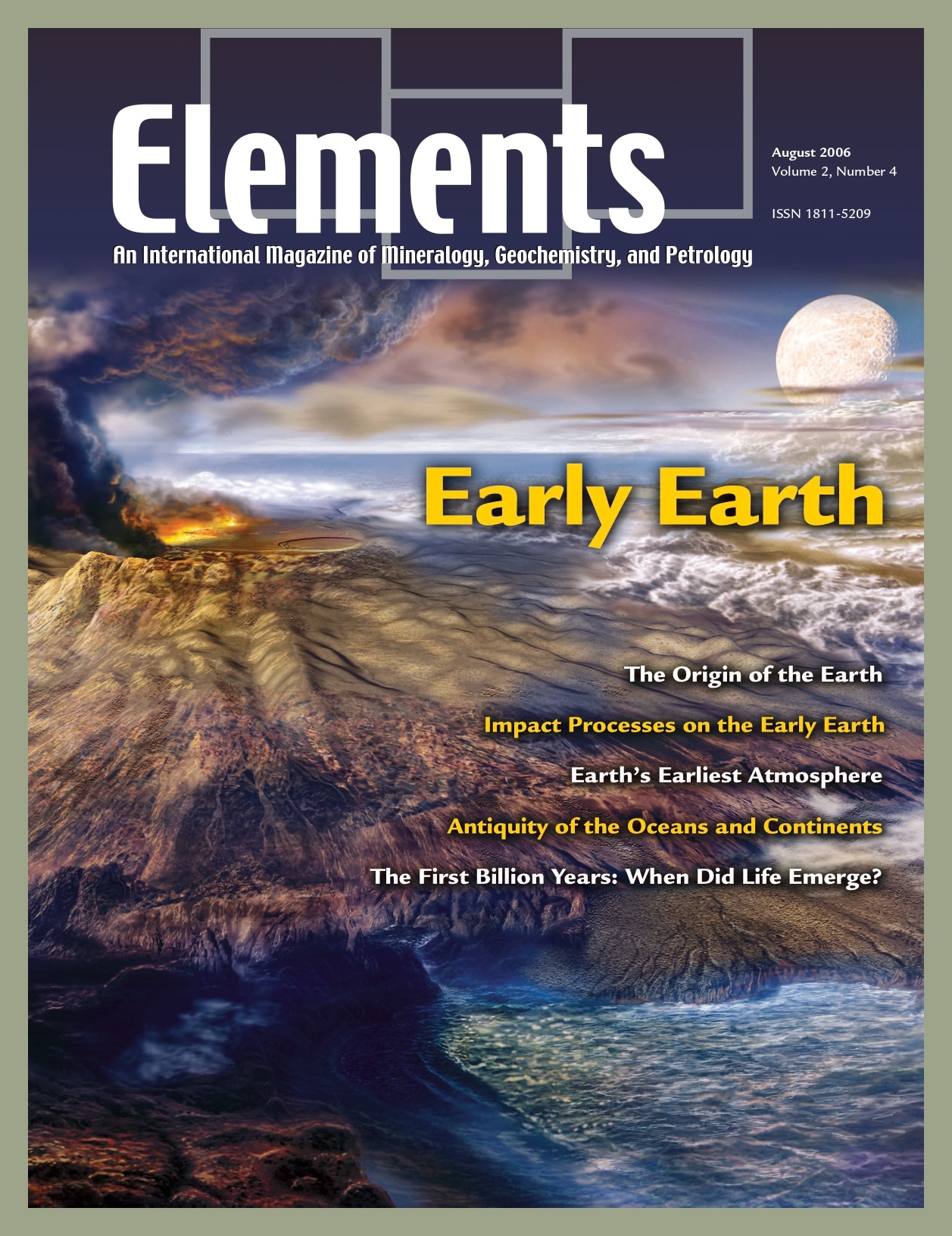
Early Earth, August 2006, Vol. 2, No. 4
$20.00The earliest Earth was a strange inhospitable world, yet transitions occurred culminating in the evolution of life within the first billion years. The preservation of a sparse and ambiguous rock record has encouraged debate.