Heavy Stable Isotopes: From Crystals To Planets, December 2021, Vol. 17, No. 6
June 28, 2024
Organic Biomarkers, April 2022, Vol. 18, No. 2
June 28, 2024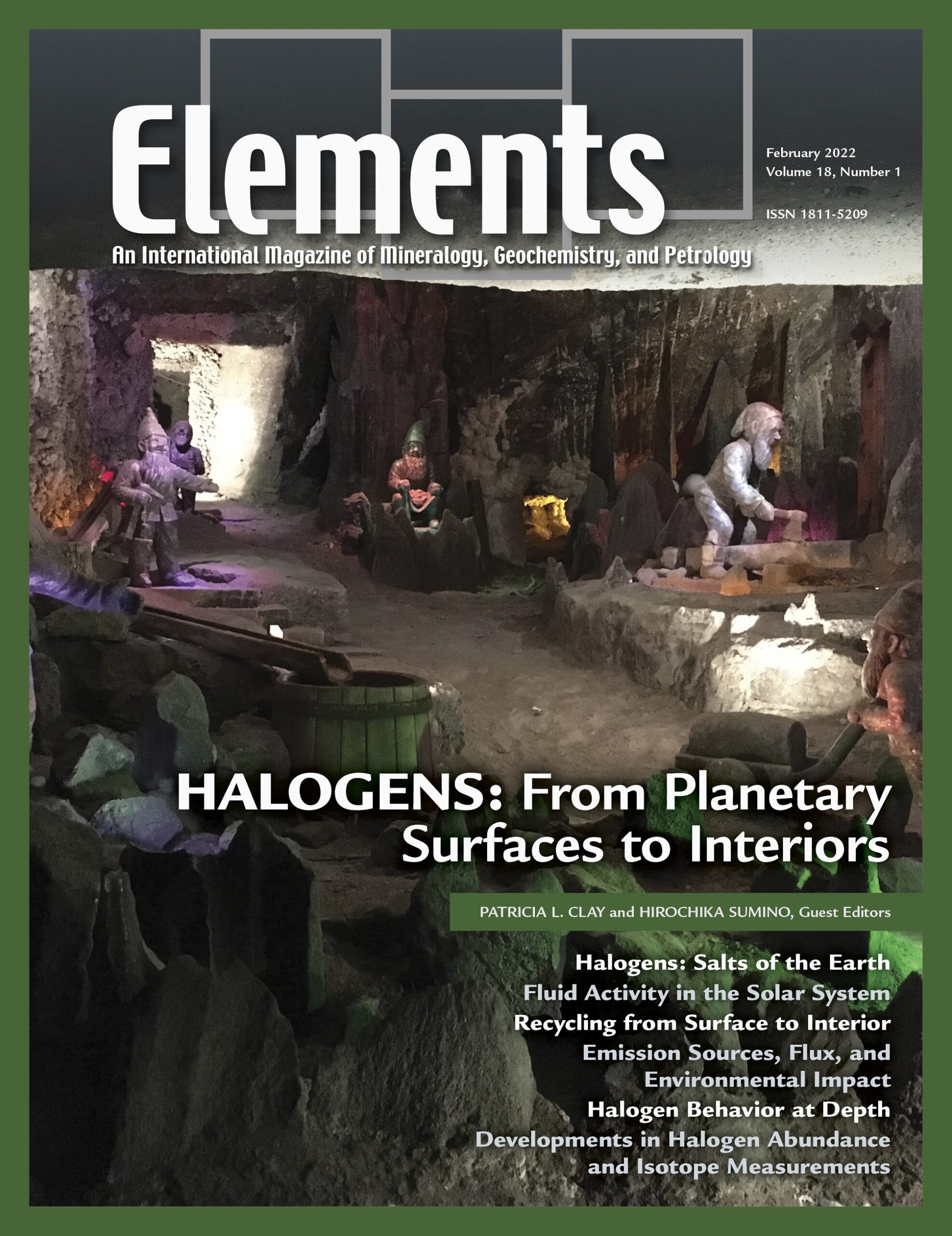
Halogens: From Planetary Surfaces To Interiors, February 2022, Vol. 18, No. 1
$20.00
The halogen-group elements (F, Cl, Br, and I) are common in the terrestrial inventory, though often present in trace amounts in many Earth and planetary materials. The halogens play a key role in a variety of geologic environments and processes, from mineralization to their influence on the composition of Earth’s atmosphere when released as oceanic, volcanogenic, and anthropogenic emissions.
Halogens: From Planetary Surfaces To Interiors
February 2022, Vol. 18, No. 1
The halogen-group elements (F, Cl, Br, and I) are common in the terrestrial inventory, though often present in trace amounts in many Earth and planetary materials. The halogens play a key role in a variety of geologic environments and processes, from mineralization to their influence on the composition of Earth’s atmosphere when released as oceanic, volcanogenic, and anthropogenic emissions. Halogens act as “fingerprints” of fluid-mediated processes on Earth and other planetary bodies. These “bioessential” elements are also critically important to human health. In this issue of Elements, we explore the role that the halogens play in shaping diverse planetary systems, from the surface of planets to their interiors. We also review the techniques that are suitable for the analysis of halogen elements and of isotopes of Cl and Br in terrestrial and extraterrestrial materials.
Why You’ll Love Elements Magazine:
- Expert Contributors: Articles written by renowned researchers in the field of geoscience.
- Engaging Content: Join a community of readers who are passionate about Elements.
- Exceptional Quality: Each issue is printed on high-quality paper with stunning visuals and detailed illustrations that bring complex scientific concepts to life.
Order your copy of the February 2022 issue of Elements magazine today and delve into halogens: from planetary surfaces to interiors.
Related products
-
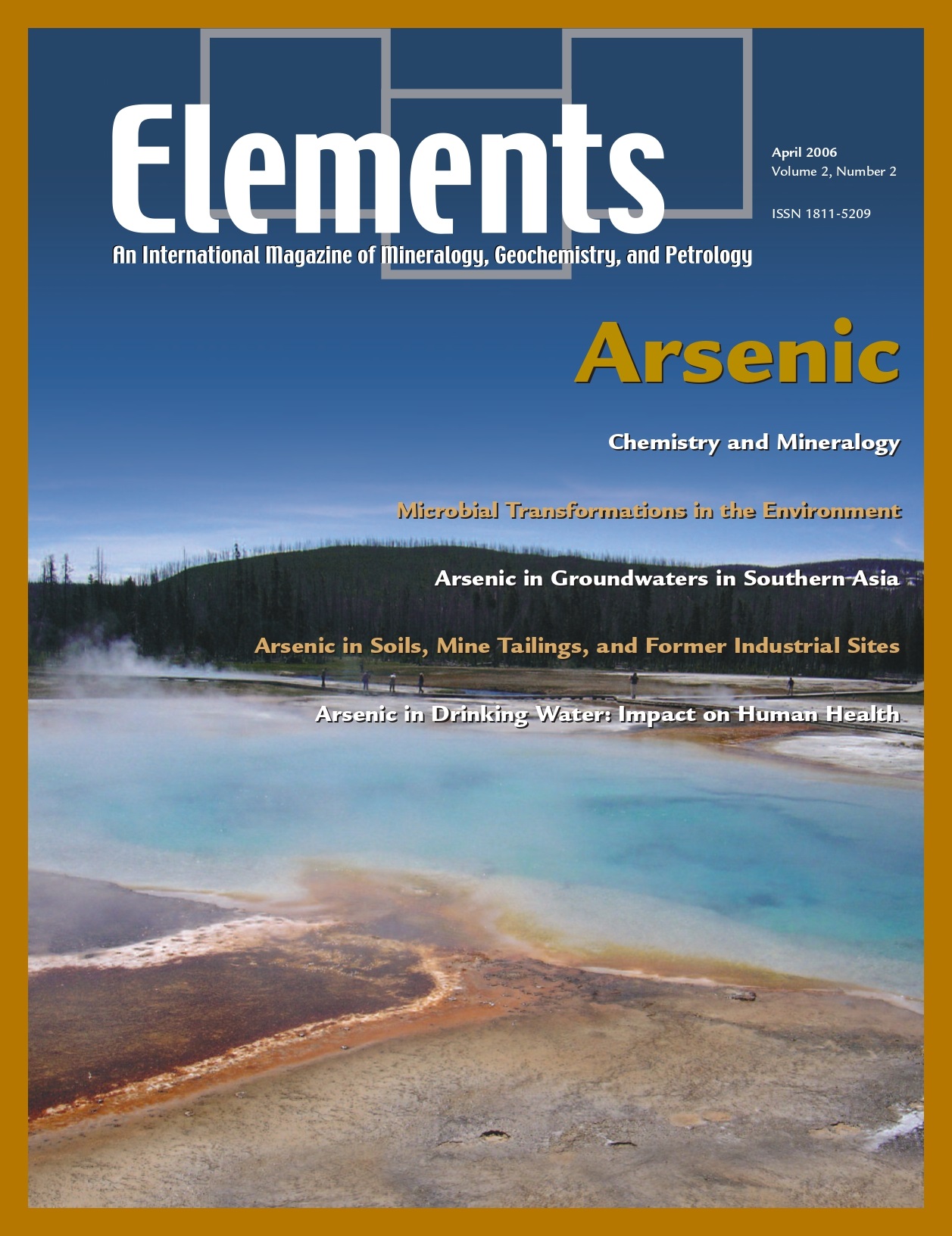
Arsenic, April 2006, Vol. 2, No. 2
$20.00Arsenic is an element known throughout history as a classic poison. Currently, very small but highly significant concentrations of this element in drinking water supplies are causing massive health problems to many millions of people in some of the world’s poorest nations, and more localised sources related to mining and processing are also a concern.
-
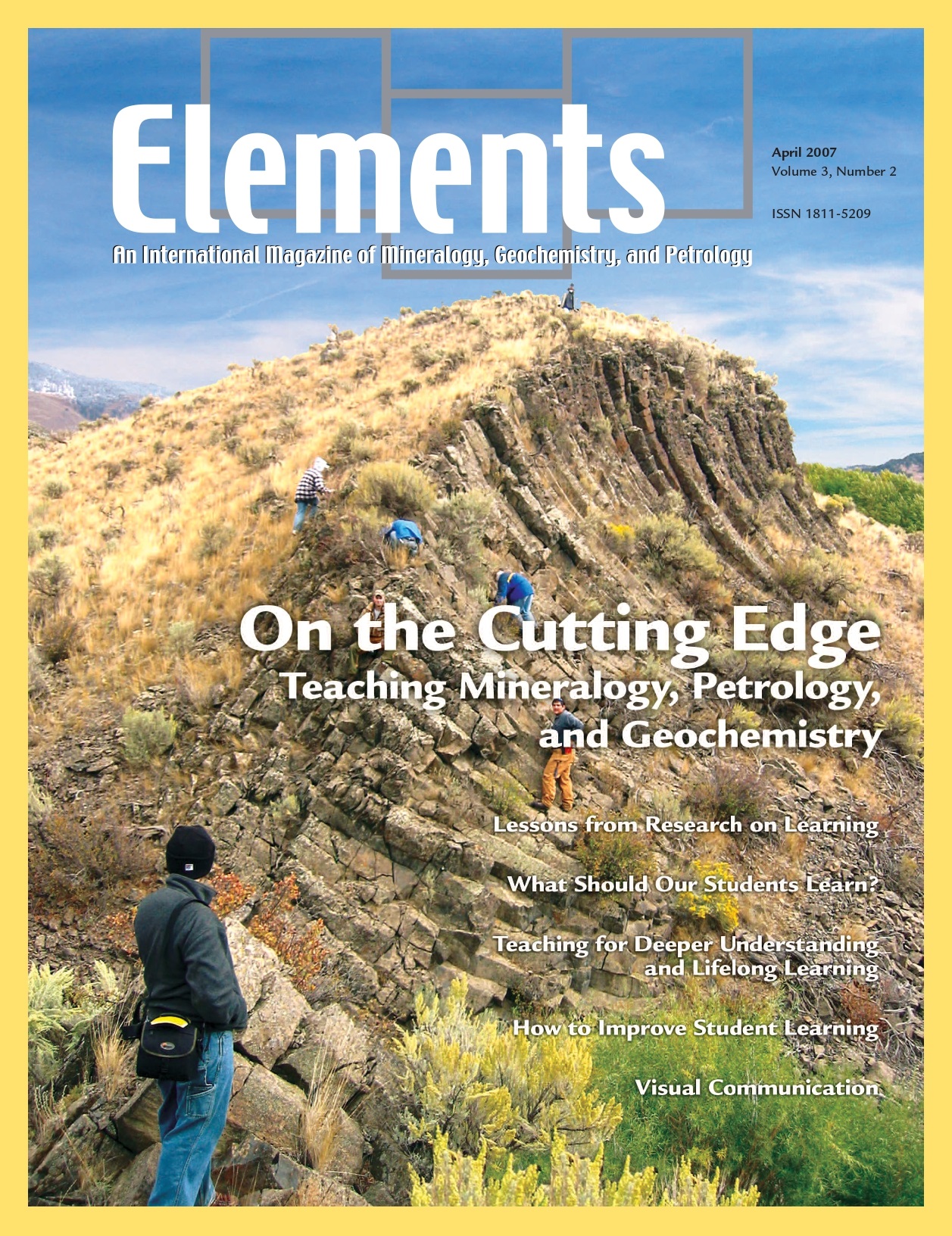
On The Cutting Edge: Teaching Mineralogy, Petrology, And Geochemistry, April 2007, Vol. 3, No. 2
$20.00New advances in research on learning have important implications for teaching mineralogy, petrology, and geochemistry. Effective instructional practices are increasingly student centered, address diverse student learning styles, and employ a variety of active-learning strategies.
-
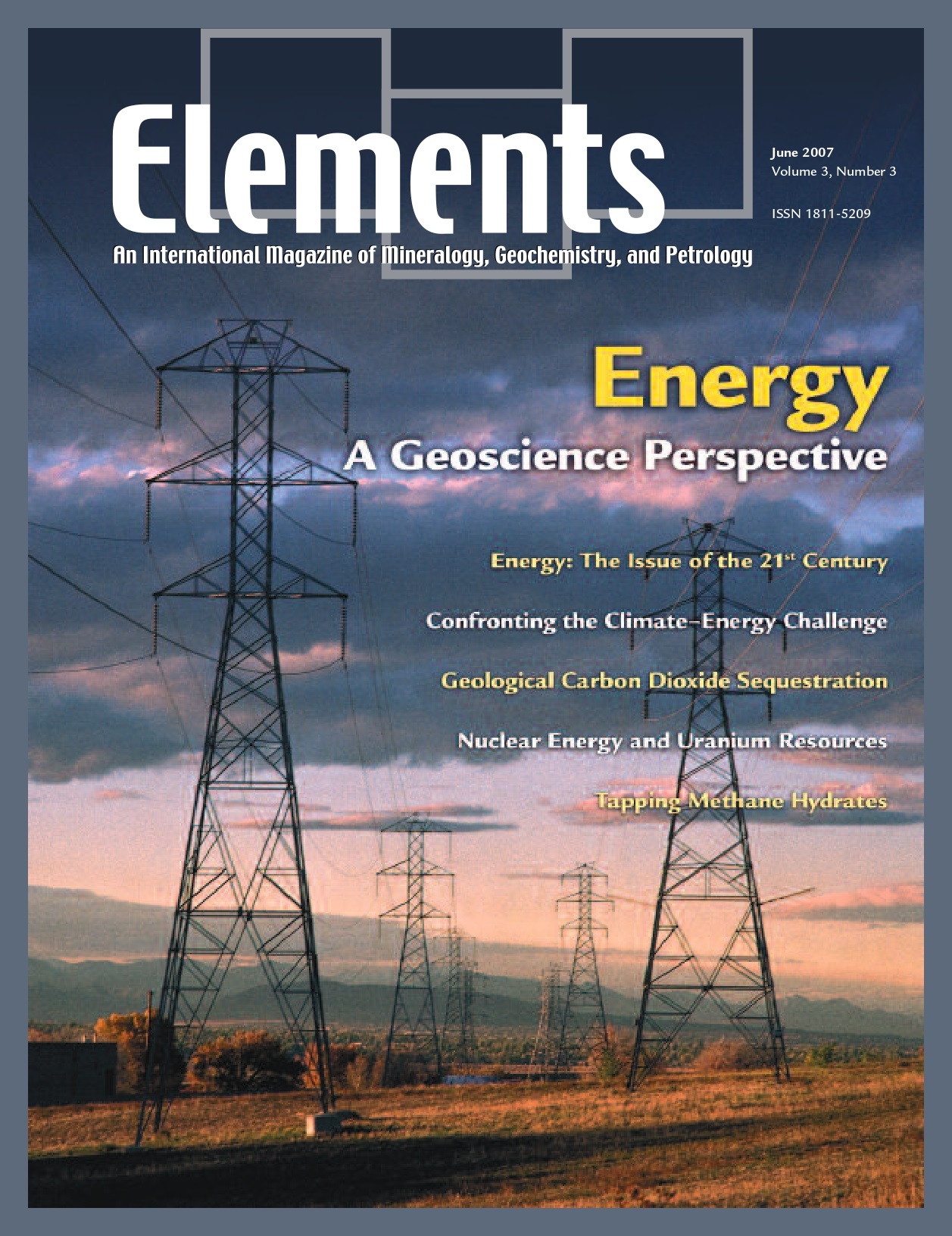
Energy: A Geoscience Perspective, June 2007, Vol. 3, No. 3
$20.00The issue of energy resources in the future may be one of the most important in the 21st century. Future climate change and the ways to abate it while still supplying needed energy will impact future political relations, world economics, human health, and the environment.